
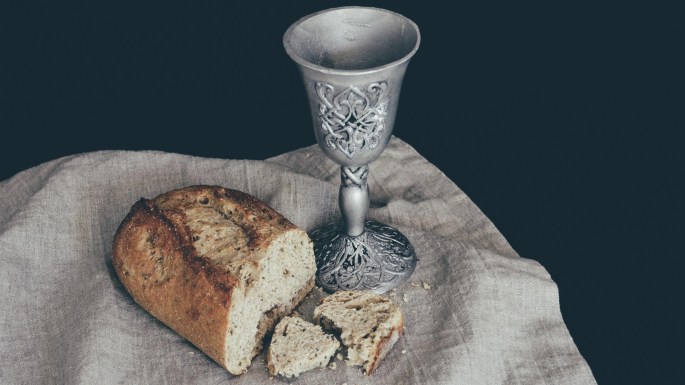
Sinning Against The Body and Blood of the Lord

What does Paul mean when he tells the Corinthians not to eat the Lord’s Supper in an “unworthy manner?” 

“So then, whoever eats the bread or drinks the cup of the Lord in an unworthy manner will be guilty of sinning against the body and blood of the Lord.”

1 Corinthians 11:27 NIV

I have heard many teachings on the Lord’s Supper over the years, and most of the conclusions based on this verse indicated we need to spend this time focusing on the sacrifice that Jesus made. We need to visualize the cross, the suffering of our Savior, and the blood that was spilled. This should be a somber, quiet, and sad occasion.

The problem is the above describes an altar (a place of sacrifice.) We have often confused the table with an altar. We, however, are called to gather around a table, not an altar!

The first thing we need to realize is the Lord’s Supper was originally part of a meal. It was a time of feasting and celebration, not mournful reflection. Yes, a full meal that fed hungry people. This was not a sip of juice and a pinch of cracker. People were eating their fill. “Supper” is the evening meal. And the explicit problem with the church in Corinth was the wealthy were arriving early and eating all the food, leaving the poor hungry. Paul indicates this type of “dinner” should be done at home, not in worship gatherings. (1 Cor. 11:20-21) Paul further states that their actions show that they “despise the church of God by humiliating those who have nothing.” (v. 22) So the problem Paul is referring to is the Church being divided by not eating the Lord’s Supper together as equals.

Paul reminds them that Jesus’ atoning sacrifice was for all of them (v. 24 – “you” is plural, as well as plural “drink” in verse 25). 

So how do we eat and drink in a worthy manner according to Paul? John Mark Hicks summarizes this passage well in his book, “Come To The Table.”

Consequently, to eat and drink worthily is not about private introspection, but about public action. Paul is not stipulating a kind of meditative silence on the cross of Christ or an introspective assessment of our relative holiness. On the contrary, to eat in an “unworthy manner,” in this context, is to eat in a divisive manner like that which existed in Corinth. The church must examine itself about the manner in which the supper is conducted (1 Cor. 11:28). There may be many ways to eat the supper unworthily (e.g., 1 Cor. 10:18-21 where Corinthians ate unworthily because they ate with a dual commitment, serving two masters), but the specific unworthiness in 1 Corinthians 11 is a communal problem, not an individualistic one. The church eats worthily when it eats as a united community embodying the values for which Christ died.”

John Mark Hicks, Come to the Table: Revisioning the Lord’s Supper (Abilene, TX: Leafwood Publishers, 2012).

3 Sins You Likely Ignore

Most followers of Jesus could probably recite the fruit of the Spirit. But Paul actually gives two lists in this passage; one list to live by, and one to avoid. Unfortunately we don’t do a very good job of avoiding the so called “acts of the flesh.” Do you know what’s on the list?

The acts of the flesh are obvious: sexual immorality, impurity and debauchery; idolatry and witchcraft; hatred, discord, jealousy, fits of rage, selfish ambition, dissensions, factions and envy; drunkenness, orgies, and the like. I warn you, as I did before, that those who live like this will not inherit the kingdom of God.

Galatians 5:19-21 NIV

Some of these are fairly self explanatory, but I’d like to focus on three that you may not have paid attention to. The first is discord. The Greek word is eris and is translated as discord, dissension, rivalry, arguments, strife, and quarrel in your New Testament. The second word I’d like to look at is dissensions. This Greek word dichostasia is only used here and in Romans 16:17 to instruct the church to stay away from those who cause “divisions.” The last word I want us to look at is factions. The Greek word is hairesis which is translated as factions, heresies, sect, and party (group).

Most of us would heartily agree that sexual immorality, fits of rage, drunkenness, orgies, idolatry and the like are clearly wrong. Of course living like this would keep someone out of the kingdom of God (v. 21). But causing division? Arguing? Rivalry? Really? Yes! A divisive person “will not inherit the kingdom of God.” 

It’s clear that Jesus and the writers of the New Testament hated division. It’s almost always listed along with all those sins that we hate. And yet we seem to be ok with division for some strange reason. The only time it’s really ok to divide is from a divisive person. The church is supposed to have nothing to do with people like that! (Rom. 16:17)

So before we speak we need to check our hearts, check your motives, and carefully watch our words. We are the people who are called to build up the body of Christ, not tear it down.

Do not let any unwholesome talk come out of your mouths, but only what is helpful for building others up according to their needs, that it may benefit those who listen.

Ephesians 4:9 NIV

Whatever It Costs, It’s Worth It!

Our Immerse reading is almost complete! Week 7 covers Hebrews, James, & John. Today I want to focus on Hebrews. The anonymous writer basically sends a written sermon to Jewish believers who had confessed Jesus as the Messiah, and were now facing great persecution for their belief. Instead of giving up and turning back to Judaism, the Hebrew writer encourages these believers to continue in their faith, and does show by showing how much greater (superior) Jesus is than anything, or anyone else! Here are some of the examples the Hebrew writer gives:

  • God now communicates to the world through Jesus (1:1-4)
  • Jesus is greater than Angels (1:5-14)
  • Jesus suffered just like you, and will help you! (Chapter 2)
  • Jesus is greater than Moses (3:1-6)
  • In Jesus we find the ultimate Sabbath Rest (4:1-13)
  • Jesus is the greatest high priest (4:14-7:28)
  • Jesus established a better covenant relationship for us (8:1-9:28)
  • Jesus is the greatest, eternal sacrifice (10:1-18)

In between these sections of comparison are encouragements to these persecuted Jewish Christians to keep their faith, and persevere even though it’s difficult to do so. And then the book comes to the main argument in chapters 11 & 12: Continue in your faith and run the race Jesus has set before you!

“Faith shows the reality of what we hope for; it is the evidence of things we cannot see. Through their faith, the people in days of old earned a good reputation.”

Hebrews 11:1-2 NLT

According to the Hebrew writer, faith requires verbs! Action is a must! Faith isn’t something that just happens between the ears, it’s lived out. All of chapter 11 are examples of Biblical characters that were commended for acting on their faith. This is written to a group of Jewish Christians who would be persecuted for acting on their faith, and the Hebrew writer calls them to go full steam ahead! Don’t back down, don’t hide, live out your faith! RUN THE RACE! And we find our strength to run by considering what Jesus did for us!

“Think of all the hostility he endured from sinful people; then you won’t become weary and give up. After all, you have not yet given your lives in your struggle against sin.”

Hebrews 12:3-4 NLT

In our sermon this week we’ll be looking at Mark 8 & 9 where Jesus reminds us that if we are to follow him, we must DENY ourselves, CARRY our crosses, and FOLLOW him (Mk. 8:34). Notice the VERBS?

Following Jesus isn’t easy. It isn’t always comfortable. As a matter of fact it may very well cost you your life. BUT IT’S WORTH IT! 

Whatever you are going through this week, live out your faith. Deny yourself, carry your cross, and follow him. Whatever it costs you, it will be worth it to be His disciple!

Stop Acting Like Satan

For the next 5 weeks the attention of our bulletin articles will be to support our readings from Immerse: Messiah. If you haven’t decided to join us for Immerse yet, it’s not too late. We have 5 groups meeting on 5 different days in 5 different locations. Hopefully you can make one of them fit into your schedule.

This week what really stood out to me was from Romans 14 (Immerse pg. 198). After talking about differing views about food between Gentile and Jewish Christians in Rome, he also talks about calendar differences between the two. Coming from very different backgrounds means they obviously have very different practices. Yet Paul’s goal is not who is right and who is wrong. Instead his goal is unity. Each group should be fully convinced they are right before God (even though they are not practicing the same things!)

Again, Paul is concerned with their unity, not uniformity!

He then summarizes his argument, and gives us some clues as to what might be happening in Rome.

So why do you condemn another believer? Why do you look down on another believer? Remember, we will all stand before the judgment seat of God. For the Scriptures say, 

“ ‘As surely as I live,’ says the Lord, 

‘every knee will bend to me, 

and every tongue will declare allegiance praise to God.’ ” 

Yes, each of us will give a personal account to God. So let’s stop condemning each other.

Decide instead to live in such a way that you will not cause another believer to stumble and fall.

Romans 14:10-13 NLT (emphasis added)

Apparently these Roman Christians were spending a great deal of time accusing and attacking each other. That’s acting like Satan, not Christ. (FYI – “satan” means accuser)

Paul isn’t concerned with matters of opinion, he’s concerned with infighting that might ruin someone’s faith in the Lordship of Christ. Specifically in the context, don’t appear to be worshipping idols (which are demons – see Deut. 32:17 & 1 Cor. 10:20) and in doing so cause another person to fall into this practice.

The history of the Church is full of those who excelled at accusing and condemning other Christians. Sadly this is not just a sin of the past. It still happens today, and people lose their faith as a result. This is exactly what Paul is telling us not to do!

Disagreements will happen. God knows that. Paul tells us to seek unity, not uniformity.

But the moment we let these disagreements turn into accusations and mud slinging, we’ve joined team satan. (Rev. 12:10)

And that’s simply not a team I’m willing to be a part of. How about you?

The Only Thing That Counts

For the next 6 weeks the attention of our bulletin articles will be to support our readings from Immerse: Messiah. If you haven’t decided to join us for Immerse yet, it’s not too late. We have 5 groups meeting on 5 different days in 5 different locations. Hopefully you can make one of them fit into your schedule.

Our readings for this week will take us through the 1 & 2 Corinthians, Galatians, and Romans. One of the things that has really stood out to me in Paul’s letters is how he calls us to love as Christ has loved us! Paul comes back to this theme in practically all his writings, but let’s just look at a few verses in Galatians.

The only thing that counts is faith expressing itself through love.

Galatians 5:6 NIV

You, my brothers and sisters, were called to be free. But do not use your freedom to indulge the flesh; rather, serve one another humbly in love. For the entire law is fulfilled in keeping this one command: “Love your neighbor as yourself.”

Galatians 5:13-14 NIV

Paul is writing to a group of Gentiles (non-Jews) who are wrestling with their identity in Christ. Apparently there was a particular group of Jewish Christians who were discouraging the Gentiles in Galatia by putting them down, specifically as it related to following the law of Moses. I can almost hear them saying, “Of course you know you aren’t real followers of the Messiah unless you are just like us and keep the entire law of Moses, circumcision and all!”

Paul writes this part of Galatians to encourage the believers. Their identity isn’t found in the law of Moses. Their identity isn’t found in circumcision or non-circumcision. Rather their identity is found in the way they love others as Jesus had loved them. Through humble service to each other, and loving those around them, they were fulfilling all the requirements of the law. The only thing that counts is faith expressing itself through love.

I’ve been blessed to see some excellent examples of this in the lives of some of our East Side family members the last couple of weeks. I’ve seen people quietly and humbly tend to the needs of other church members. I’ve seen people abandon their own schedules in order to assist both members of our family, and people in our community we are trying to reach. I’ve seen people sacrifice time, money, and talents all in the name of loving others for the sake of Christ.

Jesus made it very clear. The world will know who his disciples are by the way we love.

So I ask you: How well are you loving your neighbors? How well are you loving the “others” in our community? When was the last time you went into the mess in order to lovingly bring someone else out of it?

Loving “others” is radical. Spending time with them, listening to them, praying with them, feeding them, caring for them…the Kingdom of God is made to do exactly this. Read Mark’s Gospel, and make note of what you see Jesus doing.

And then “go and do likewise.

Immerse: Messiah (Week 1)

For the next 8 weeks the attention of our bulletin articles will be to support our readings from Immerse: Messiah. If you haven’t decided to join us for Immerse yet, it’s not too late. The small groups don’t begin until this Friday, and you can still make it to a first time group until next Thursday. We have 5 groups meeting on 5 different days in 5 different locations. Hopefully you can make one of them fit into your schedule. (And if you’re reading this from some other part of the world, you can order the Immerse: Messiah book online and start your own small group wherever you are! Just go to www.immersebible.com.)

Our readings for this week will take us through the Gospel of Luke. One of the things that has really stood out to me in this reading is about the young Jesus being left at the Temple, and how that story sets up the rest of Luke’s Gospel. You can read about this on pg. 8 of your Immerse book (Luke 2 for everyone else).

First the story takes place at the Passover festival. His parents can’t find him anywhere on the way home, so they return to Jerusalem to look for him, and finally find him 3 days later at the Temple. Jesus’ responded: “But why did you need to search?…Didn’t you know that I must be in my Father’s house?” (Lk. 2:49 NLT) There’s also an alternate reading of this passage where Jesus says “Didn’t you realize that I should be involved with my Father’s affairs?”

Fast forward toward the end of Luke’s Gospel. The Passover festival is beginning (Lk. 22/Immerse pg. 52). Jesus is arrested that night, an unjust trial takes place in the middle of the night, he is handed over to the Romans, then sentenced. Jesus is crucified that Friday at the end of the Passover, and his death leaves his family and friends there in Jerusalem alone, and afraid. And when they see the resurrected Jesus after three days they are full of questions. After Jesus convinces them, his response is basically, “Didn’t you know?”

Then he said, “When I was with you before, I told you that everything written about me in the law of Moses and the prophets and in the Psalms must be fulfilled.” Then he opened their minds to understand the Scriptures. And he said, “Yes, it was written long ago that the Messiah would suffer and die and rise from the dead on the third day.

Lk. 24:44-46 NLT/Immerse pg. 59

Luke also carries this idea of 3 days of confusion forward into Acts (hint, look at Paul’s conversion).

I’m curious to see what you picked up on from the reading! Reading through a Gospel quickly like this helps you to see things/patterns/themes that you may not see when taking a longer time to read. Did you notice how many events happen around a table? Did you notice how often women are involved in the Jesus story? 

My prayer is that this short season of reading will be a blessing that ignites a passion for reading and rediscovering the story of Jesus again. Scripture tells us that the Word of God will never return void. 

I guess the question I’m asking is what will you allow the Word of God to do in your life as you read these Scriptures?

Mary’s Song

As we approach the last Sunday of Advent, I’d like to draw our attention to the words of a young teenage girl who just received news that she would become pregnant. 

46 And Mary said: 
“My soul glorifies the Lord 
47 and my spirit rejoices in God my Savior, 
48 for he has been mindful 
of the humble state of his servant. 
From now on all generations will call me blessed, 
49 for the Mighty One has done great things for me— 
holy is his name. 
50 His mercy extends to those who fear him, 
from generation to generation. 
51 He has performed mighty deeds with his arm; 
he has scattered those who are proud in their inmost thoughts. 
52 He has brought down rulers from their thrones 
but has lifted up the humble. 
53 He has filled the hungry with good things 
but has sent the rich away empty. 
54 He has helped his servant Israel, 
remembering to be merciful 
55 to Abraham and his descendants forever, 
just as he promised our ancestors.”

Luke 1:46–55 NIV

Rather than dread, and fear, Mary sees her life mission as a blessing. But look specifically at how she saw this as a blessing. First, she acknowledges that God has chosen to use someone of a “humble state.’ (v. 48) We know from Luke that Joseph and Mary lived in poverty (Lk. 2:24, Lev. 12:8). Second, she realizes this is a reversal of the power structure. Thrones will be toppled and humble (poor) will be elevated, the starving are filled and the rich are not. (vv. 52-53) The last statement I want us to consider is vv. 54-55. Within her womb resides the help of Israel, the mercy of God, and the fulfillment of the promise made to Abraham, and subsequent promises to his “descendants.” (Gen. 12:3)

This is the moment the prophets foretold, and would confirm again at the temple (Lk. 2:25-38). This is the promise of a Savior, of a King, of a Messiah. It is something brand new, and yet very old. It is the end of centuries of waiting, and the beginning of more. It is a moment on which everything that was, everything that is, and everything that will be hinges. 

Praise our faithful God! He has come, and He is coming again!

Sermon Text for 12/22/19 – Psalm 113; Psalm 146; Luke 1:67-80; Luke 1:46-56; Luke 2:1-14

Why You Really Need Joy and Sorrow

Our thoughts for the past couple of weeks have centered around a Season of Hope, and our theme at East Side this year has been “Hope.” Advent is a season of hopeful waiting for the fulfilment of God’s promises.

The last several weeks have been looks at the prophecies leading up to the destruction and exile of Jerusalem & Judah. Last week we looked at Isaiah 40 and the hopeful promise that God’s people would return home, and he would come to them! This week we see the fulfillment of God’s promise that the people will return home, but not all is joyful.

Ezra begins in the same way 2 Chronicles ends with a proclamation from Cyrus king of Persia. Ezra also wants us to remember that this fulfills the Jeremiah 25 & 29 prophecy that the people would return home from exile. God is keeping his promise to the people!

Ezra 3 tells the story of the reestablishment of worship in Jerusalem. The altar was rebuilt and the people celebrated the Festival of Tabernacles (Lev. 23:33-43). I find this a fitting first celebration for the newly resettled exiles. Tabernacles was to remind the Israelites of the time they lived in temporary huts during the journey out of Egypt. The entire festival recalls the journey out of Egyptian slavery/exile to the promised land; a fitting reminder to those having just journeyed back to the promised land from Babylonian exile. In both generations, God was faithful in keeping his promises.

Our text in Ezra this week ends with the end of chapter 3 and the laying of the foundation of the temple of Yahweh. I find this text both beautiful and haunting.

With praise and thanksgiving they sang to the Lord: “He is good; his love toward Israel endures forever.” And all the people gave a great shout of praise to the Lord, because the foundation of the house of the Lord was laid. But many of the older priests and Levites and family heads, who had seen the former temple, wept aloud when they saw the foundation of this temple being laid, while many others shouted for joy. No one could distinguish the sound of the shouts of joy from the sound of weeping, because the people made so much noise. And the sound was heard far away.

Ezra 3:11-13 NIV

Notice that everyone praised God in this moment, but the emotions were very mixed. Some were joyful to see this day come. Some were lamenting the loss of the original temple. What brought joy to some brought mourning to others. Excitement and weeping. Yet a great shout of praise came from all.

Our church family is much like this group in Jerusalem, a place of rejoicing and mourning. Sometimes those two feelings are so intertwined that we feel them all at once, especially this time of year. A friend recently reminded me Advent is a time for the church to come together as one, despite our emotions, in hopeful expectation of the second Advent of Christ.

For some the waiting brings joy, for others sorrow. We need both. We are called to rejoice together and mourn together because we are called to be together! The church becomes more like Christ when we rejoice and mourn together.

Wherever you find yourself in the emotional spectrum, you are welcome here. Join the body of Christ as we worship our God in hopeful expectation of his Advent! Come Lord Jesus!

Sermon text for 12/15/19 – Ezra 1:1-4; Ezra 3:1-4, 10-13; Luke 2:25-32

Waiting Beyond Death

During this Season of Hope, we are studying texts related to the Advent, or coming of the fulfillment of God’s promises in the Messiah. Just like ancient Israel had to wait for his coming, we too wait for his second coming.

Isaiah 40 makes reference to this time of waiting.

6 A voice says, “Cry out.” 
And I said, “What shall I cry?” 
“All people are like grass, 
and all their faithfulness is like the flowers of the field. 
7 The grass withers and the flowers fall, 
because the breath of the Lord blows on them. 
Surely the people are grass. 
8 The grass withers and the flowers fall, 
but the word of our God endures forever.”

Isaiah 40:6–8 NIV

In these verses we have a heavenly voice (the speaker is unclear, perhaps Yahweh, an angel, or some other heavenly being) telling Isaiah that humans are like grass and their works like flowers. What the voice is reminding us is that grass and flowers are only around for a season before they wither and fade away. They do not last forever. But the word of God does indeed last forever.

Let’s put this in the context of Israel coming out of exile. They have been away from their homes for a generation, and there is this promise of return. God will make the path easy, he will restore Jerusalem, he will keep his promises. His word will not fail! But humans don’t live forever. We all die. God’s promises, however, do not die.

Isaiah is trying to remind us that we may wait for God to fulfill his promises, and they may not be fully fulfilled in our lifetime before we “wither.” Isaiah wants us to remember that our waiting does not negate God’s promises. Even if we never see them fulfilled, we can rest assured that they will be fulfilled because God’s word endures forever.

Centuries after this text was written, one would come as “a voice of one calling: In the wilderness prepare the way for the LORD.” (Isa. 40:3, Mark 1:3). Mark, as well as the other Gospel writers, want us to realize that God kept this promise fully in the ministry of John the Baptist, “and the glory of the LORD” was revealed in the Advent of Jesus (Isa. 40:5).

Though Isaiah’s words to exiled Israel were not fully realized in their lifetime, God fulfilled his promise through the Advent of Jesus. And though God’s kingdom has not fully come, we can rest assured that God will fulfill his promises through the Advent of Jesus.

Sermon text for 12/8/19: Isaiah 40:1-11; Mark 1:1-4 

Awaiting The Promised Messiah

Our faith heritage in the churches of Christ has often shied away from the season of Advent as being “unauthorized in Scripture.” However, the word “advent” simply means “coming.” The OT is full of hope in expectant waiting for the coming Messiah, the only one who could set the world aright.The NT is also full of the same hope as the church expectantly awaits Christ’s return. Advent is a season of expectant waiting for the return of Jesus at the Second Coming. We look forward to Christ’s return through the lens of those who waited for his first coming. 

“‘The days are coming,’ declares the Lord, ‘when I will fulfill the good promise I made to the people of Israel and Judah.”

Jeremiah 33:14 NIV

This week we turn our attention to Jeremiah 33 and Mark 8, and the promise of the Messiah. God had promised in the Garden that a descendant of Eve would eventually crush the head of the serpent, and in doing so the human would be struck (Gen. 3:15). God promised to Abraham “through your offspring all nations on earth will be blessed” (Gen. 22:18). God promised through Moses that he would “raise up for you a prophet like me from among you, from your fellow Israelites. You must listen to him.” (Deut. 18:15). 

This promise from God had been a long time in coming. Centuries of waiting for the one who would defeat evil, bless all nations, be the voice of God that we listen to, and many other prophecies, came at the perfect time, but for humans, the wait seemed endless.

And when the Messiah came, the majority of the people were not prepared.

As Israel and Judah awaited the fulfillment of God’s promise, we also wait for the fulfillment of the second coming of the Messiah Jesus. Many of us have forgotten that we are called to watch, to listen, and to open our hearts in expectant preparation for his coming (Matt. 25:1-13). 

We are called to listen to his Word. We look for signs of his presence in this world…a light in the darkness, a voice in the silence, and a stirring deep within us. We’re good at singing worship songs that reiterate these things, but do we truly expectantly wait and prepare for his return?

All of the Gospel writers want us to realize that the life of Jesus was the fulfillment of promises of old (Mt. 1:22-23; Mk. 1:1-4; Lk. 4:17-21; Jn. 1:45; etc.) and the renewal of promises yet to come (Isa. 65:17; Mt. 14:37; Lk. 12:40; Mk. 13:35; Jn. 14:2-3; Rev. 21:5). In Christ, God has and will continue to fulfill all promises.

And so we wait.

And the question that we all must answer is, “Am I ready for the coming of Christ?”