
“It was in the last place I looked.” – 2018 Blog Tour

For some reason I discovered recently that posts I had scheduled long ago failed to post, so you are about to get a wave of blog posts coming down the internet pipeline. Here is a fantastic post that’s part of the 2018 Blog Tour by Mark Adams. Dr. Mark Adams is the preaching minister for the Kings Crossing Church of Christ in Corpus Christi, Texas. He is married to his wife Carolina, whom he met when the two of them were students together at Harding University. He is also a graduate of Lipscomb University. You can learn more about Mark at his website: https://kingdomupgrowth.com

“It was in the last place I looked.”

One of my least favorite expressions follows an anxious search for keys, wallets, and phones. Having scoured the house, the office, or the last place someone visited, when they find what they’ve been seeking, they might exclaim, “Wouldn’t you know it? I found it in the last place I looked for it!”

My inner response is always, “If you’ve already found it, why would you continue looking?” Nobody ever says, “Hey, now that I have my car keys in hand, I’m going to check a few more places to see if they’re there, also.” While there are aspects of our Christian journey that involve a continual seeking and searching, such as a deeper understanding of God’s inexhaustible love and mercy, there are some things that we should stop seeking the way that we had before we were Christians. Here are three things that Christians can stop seeking. 

1. You can stop seeking people’s applause and approval.

The great goal for which all Christians are striving is to stand in the presence of God, and to hear God say, “Well done!” We earnestly seek God’s applause. In Christ, we are confident that there is “now no condemnation for those who are in Christ Jesus.” This frees us to live out of our joy and appreciation for the love God has poured on us with lavishness. 

Likewise, it matters to us that people can see the good things that we do because of our faith, and even if they don’t join us, they can still glorify God because of what God has done through us. We care that people will assume things about God because of what they see in us. 

Even so, as Christians, we need not seek people’s applause and approval the way that the world does. If your sense of self-worth and happiness derives only from what people think and say about you, you’re going to be drinking from a water source that will generally leave you thirsty. People are fickle. They can love someone one minute and turn on them the next minute for a variety of reasons these days, and the function of the always-present smartphone combined with social media only exacerbates and hastens the problem. If you subject your wellbeing to the hands of people who are chasing after popularity of their own, no matter how much you’ve been liked or admired, you’re still going to have to keep seeking their approval.  

Do you understand that God loves you as his own, irrespective of any other factor you could think up or present? Even if your walk involves the occasional stumble or tumble, you rest safe in the Grace of God whose love for you existed even before you did. You can stop seeking people’s applause and approval because God has the final word, and God loves you dearly. As he demonstrated in Christ, he would rather die than try to imagine Eternity without you there.  

2. You can stop seeking to establish your value through your own competence.

I struggle with anxiety if I feel underprepared for a situation. I work on my sermons and classes far in advance. I try to study every angle of something about which I believe people might ask me. I’ve always worked hard to be a resourceful person, to whom people feel they can turn if they need knowledge and insight. Sometimes, this can become an idol.

Your idol may not be an idol of knowledge, but there are probably other ways you try to establish your worth through what you can do. Are you the person who can get things done? Are you the person who always directs or volunteers in a certain way? Are you the person on whom everyone has to depend when they need a certain thing? 

It is one thing to be a valuable asset because of your love for the greater community. It is another thing to share your gifts and talents, but to have strings attached for what you expect in return. It is a blessing to be able to share, to give, and to inspire. But when we must be seen a certain way because of what we can do, we have stopped relying on God for our sense of worth and have settled for an idol, who will leave us unsatisfied. Your gifts are yours for the building up of the body of Christ. Use them for the good of others, and stop seeking to establish your worth through what you can do, rather than through the way God has valued you.

3. You can stop seeking to prove your worth through your possessions.

Christians in the West have a hard time letting go of our cultural tendency to buy things for their status rather than for their usefulness. Name brands, vehicle sizes and features, and a variety of clothing and personal ornamentation do and will continue to grab the world’s attention. It is this tendency, I believe, that Paul is addressing when he warns about the importance of dressing with modesty. Even though he would probably be in agreement with our general aversion to dressing overly “sexy,” Paul is concerned that when a person shows off their value through what they use to clothe themselves, they necessarily exclude and demean the poor among us who have no ability to succeed in a contest of possession acquisition. 

Let us not forget that those of us who have been baptized into Christ have clothed ourselves with Christ. Jesus is our brand. Jesus is our identity. Jesus is our greatest treasure and our highest hope

Before you make your next purchase, you might ask yourself:

  • Is this valuable for how it is useful, or for how it will make people see me?
  • Does my displaying of this item potentially alienate someone who can’t afford one of the same? 
  • Do I get uneasy at the thought of people not seeing me as successful for wearing a lesser brand?

Until we stand before God, may we always seek God with a holy hunger. May we never exhaust our desire to learn and embody God’s love. But for now, let’s remember that we’ve already found what matters most. We can stop worrying so much about what other people think about us. We can quit trying to prove how strong we are on our own. If we were really so strong, we wouldn’t have needed a Savior. We can stop distracting people from a treasure of ultimate worth by obsessing over things we know we’ll be donating to Goodwill next year. One of the many ways Jesus lightens our burdens is by helping us to release what we no longer need to seek. 

Regaining the search for the Search – 2018 Blog Tour

I’m excited to share with you a guest post from John Dobbs as part of our 2018 Blog Tour. Our theme for this year is “What are you seeking?” 

John Dobbs is the preaching minister for the Forsythe Church of Christ (http://facoc.org) in Monroe, Louisiana. He can be found on Facebook, followed on Twitter (@johndobbs) and read on his blog (http://johndobbs.com). He’s been married for 31 years to the lovely Maggy. He has two children and two grandchildren. I hope you enjoy this article as much as I do!

God created mankind upright, but they have gone in search of many schemes. – Ecclesiastes 7:29

In one respect I think we can say that people are always searching for something. There’s some unmet need, some empty place that needs to be filled, some missing component that has left our hearts lacking. Epic poems and long novels have been written about the search for that unidentifiable something. So I do stipulate that this is a realistic expectation for many. Most? I don’t know.

“Overstimulated and Overwhelmed” is how one article describes the condition so many are facing today. “This overstimulation can come from a variety of sources including excessive noise, multitasking, and cluttered surroundings.  Overuse of electronic media is a modern phenomena particularly linked to issues of anxiety, depression, and isolation.  This is unfortunately wide-reaching, as the average American spends most of their waking hours (about 11) on electronic media and internet.” Can we make the case that we are so intent on searching for meaning and connection with God that we’ve exhausted ourselves? Or could we make the case that we’ve exhausted ourselves and the search is no longer interesting to us. We’ve given up.

…There is no one who understands; there is no one who seeks God. – Romans 3:11

Maybe it’s just me, but American Christians (some? most?) are suffering a slump of sorts. Any search we can identify seems to be on hold while we explore some of those ‘many schemes’ the wise man wrote about in Ecclesiastes. Sometimes I feel that the spiritual search has fallen off of our radar while we seek fulfillment and excitement elsewhere.  If that’s true, why is this? Could it be that we have taken our eye off of the Savior? Instead of intentionally being committed disciples of Jesus, we sought to have bigger, better, brighter experiences in life, in relationships, in worship. Something to make us feel something.  Have we chased after the experience but forgotten to love and serve the people around us in the name of Jesus?

“I began to wonder if what we were doing in evangelical circles had more to do with redeeming ourselves to culture than it did with showing Jesus to a hurting world, a world literally filled with outcasts.” ― Donald Miller, Searching for God Knows What

God has promised that if we search for HIM, He will be found. Jesus said that if we seek the Kingdom first, our other needs would be met.

You will seek me and find me when you seek me with all your heart.- Jeremiah 29:13

But seek first his kingdom and his righteousness, and all these things will be given to you as well. – Matthew 6:33

And without faith it is impossible to please God, because anyone who comes to him must believe that he exists and that he rewards those who earnestly seek him. -Hebrews 11:6 

For everyone who asks receives; the one who seeks finds; and to the one who knocks, the door will be opened. – Luke 11:10

If you are feeling empty these days, look in the mirror and ask that person if they have been searching for God with their whole heart. I can’t prove it, but I think there are many people suffering from a spiritual emptiness they cannot identify. It’s not that they do not desire God. It’s more than that. It is that somehow the noise and distraction of life has kept them from desiring to desire God. The search for the Search has been put on hold. Indefinitely? How do we break out of spiritual disenchantment and renew the search for the Search? How do I learn once again to be captivated by the beauty of the Savior and in awe of the power of the Father and feel the fire of the Holy Spirit?

I hope you’re not looking for something to dazzle you here. I can’t offer you more of the stuff that has us numbed to the Spirit’s call. I can only think we must go back to basics. Have I been spending time in the Word? I’m going to suggest paper, not screen. Too many distractions and temptations when we’re staring at the glow. Break free. Have I asked God to reignite the passion for Kingdom living in my heart? Am I talking to Abba about the distance between us? What have I done for someone else lately? Not for pay, not for recognition, not for anything except the opportunity to serve. Have I been quiet? No tv, no small screens, just me and God and… no words. (It’s ok if you fall asleep… fall asleep in His presence… He loves you. You can grow in this area of listening prayer.) Am I walking alone or do I have fellow disciples to serve, study, pray and love alongside? Contemporary Christian group Building 429 sang a song about The Space In Between Us. That’s what we’re trying to bridge. Regaining the search for the Search is my desire for us.

God, for the days when I’m so distracted by the world around me and in front of me, give me the energy and strength to turn it off, turn away, and turn toward you. Grow within me the burning desire to know you more completely and serve you more faithfully. I not only desire to seek you, I desire to desire to seek you. Thank you for knowing what that means. Amen.

 Resources:
Overstimulated And Overwhelmed: Sensory Overload, Anxiety, And Depression http://www.yoursunshine.org/overstimulated-and-overwhelmed-sensory-overload-anxiety-and-depression/

Jesus is Lord!

This week’s reading comes from Luke 6 – 7:30. A good portion of chapter 6 is Luke’s telling of the Sermon on the Mount (Matthew 5-7). Since we discussed that in our study of Matthew, I’m going to focus on three other passages within our reading.

The fourth commandment called for a day of Sabbath rest. The command indicates that just as God created the world in 6 days and rested (literally stopped the creation work he had been doing) on the 7th day. While Israel was in the wilderness gathering manna, they were to gather for 6 days (collecting an extra day’s worth for the 7th) because on the 7th there would be none. Israel still looked for manna on the 7th day. I believe God did this because he wanted his people to rest, and to trust in God for provision. We often work so hard that we only trust in ourselves. If God was not faithful the people would have starved, but God is faithful and can be trusted. The command simply indicates it is a day of rest and no work should be done. The Israelites then created rules defining what work was.

Jesus (who had the authority of God to rightly interpret and apply the commands) and his disciples pick some heads of grain and ate them. This was against the rules. Jesus also heals a man with a lame right hand. Since the man’s life was not in danger this healing act again broke the rules. It seems that the Pharisees here had almost idolized the Sabbath because even doing good was considered wrong by them! Jesus gives an example of David who ate the Bread of Presence in the tabernacle and violated the law, but he did so not out of impure motives, but out of doing good for himself and his men (1 Sam. 21:1-6). Jesus said this concerning the healing: “I ask you which is lawful on the Sabbath: to do good or to do evil, to save life or to destroy it?” (Lk. 6:9) Jesus indicates that he is “Lord of the Sabbath” (Lk. 6:5) and that doing good did not violate the Sabbath. Jesus had authority to overrule their beliefs about the Sabbath.

Jesus then chooses 12 apostles from among his many disciples. I want to look at two names (Lk. 6:15): Matthew (a tax collector for the Roman government) and Simon who was called the Zealot (who was a sworn enemy of anything related to the Roman government.) In any other context, Simon would have considered it his God-given duty to kill Matthew because of his association with Rome. Truly following Jesus should remove all barriers between us and other believers. Jesus is Lord even over our relationships.

The last we’ll look at is the faith of the Roman centurion. This man was a Gentile who was very kind to the Jewish people. It seems the Jews actually liked the centurion which is highly unusual (Lk. 7:4-5). The centurion had such faith in Jesus that he indicates (through messengers) that he believed Jesus could heal his servant from wherever he was; there was no need for Jesus to come physically to the servant. Luke tells us: “When Jesus heard this, he was amazed at him, and turning to the crowd following him, he said, ‘I tell you, I have not found such great faith even in Israel.’”  This is one of only two times in Scripture that indicate Jesus was amazed and it was because of the centurion’s belief in the healing power of Jesus.

May we all place Jesus as Lord over our beliefs, over our relationships, and may we truly trust in His healing power in our lives. – Matt

Follower or Fan?

“The biggest threat to the church today is fans who call themselves Christians but aren’t actually interested in following Christ. They want to be close enough to Jesus to get all the benefits, but not so close that it requires anything from them.” – Kyle Idleman, not a fan.

That quote from Idleman really makes me think about why I follow Jesus. What motivates me to follow Him, and am I actually following Jesus, or do I simply stay close enough to get some sort of benefit?

I used to travel I-35 quite a bit between North Texas and San Antonio. Along that highway used to be a church that advertised a “Sunday Morning 20 Minute Worship Service.” Their hope was by keeping everything extremely short and compact that more people would be interested in attending their services. But if our entire motivation in going to a service is that it will require very little of me, can we really call it worship? By the way, the sign and the church have since disappeared.

In Revelation we see Jesus sending a message to several churches. To the church in Ephesus he writes this: But I have this against you: You have abandoned the love you had at first. Remember then how far you have fallen; repent, and do the works you did at first. Otherwise, I will come to you and remove your lampstand from its place, unless you repent. – Revelation 2:4-5

To the church in Sardis: I know your works; you have a reputation for being alive, but you are dead. – Revelation 3:1

To the church in Laodicea: I know your works, that you are neither cold nor hot. I wish that you were cold or hot. So, because you are lukewarm, and neither hot nor cold, I am going to vomit you out of my mouth. – Revelation 3:15-16

If Jesus were to look at our level of commitment (follower vs. fan), would he say we had abandoned our love of him? Are we putting something else first? Do we look alive by playing the part, while we’re actually spiritually dead? Is our lack of commitment enough to make him want to vomit?

What does your life say about your commitment to Jesus? Do we actually follow him, or are we simply a fan? Does our schedule, our habits, our finances, our actions truly show that we are committed to following him, even when it costs us? Or are we fans that worship him only when it’s convenient, hang on to bad habits that dishonor him because we like them more than him, and give as long as we don’t have something we want to spend our money on at the moment?

2017 is all but gone. Let’s make it a priority in 2018 to honor Jesus in every aspect of our lives! Commit to truly follow Jesus. Commit to spending time with him regularly in prayer, in Bible reading, and in worship at every opportunity. Be radical! Do what the Bible actually teaches! Commit to giving both financially and physically in the service of the Kingdom. Make following Jesus your first priority above anything else!

But seek first the Kingdom of God, and his righteousness, and all these things will be provided for you.” – Matthew 6:33

We’re Losing the Battle!

1/168th. That’s the magic number. That tiny fraction is so small. You would feel cheated if we were talking about buying a slice of pie. Yet 1/168th is exactly what most people assume will fix all of their problems.

What is 1/168th? Pretty simple really. No matter how rich, how poor, what ethnicity, what background, what level of education…we all have 168 hours to live life each week. In general, church going people spend about 1 hour in church per week…1/168th of their week. That’s very little influence during the average week! Let’s look a little closer at what other things influence our average week.

The average American sleeps 6.8 hours (we’ll call it 7) per night. Not a whole lot of influence happens when we sleep, but it does consume 49/168ths or our week. Depending on your age or career, we average between 35-40 hours per week at school or work, meaning what we do during the day has between 35 and 40 times the amount of influence that church has on us in any given week! But there’s something that eats up our time even more than school or work.

Electronics. TV, cell phones, tablets, game systems, computers…you know, electronics. The average American spends between 45 and 50 hours a week on an electronic device. Some of that electronics time overlaps at work or school, but on average electronics usage influences us 45-50 times more than our worship service on Sunday. What are we doing with them? Growing in our faith, or watching cat videos and playing games?

If you’re good at math, you’re realizing this is somewhere between 130-140 hours per week. There’s more time, yet we’re really good at filling that time too. Time to worship (yes, worship) sports, hobbies, shopping, activities and fun of all types…and pretty soon, we’ve filled our 168 hours. What I find even more troubling than the 1/168th figure itself is that only 21% of adults spend any time to connect with God. Most aren’t even getting 1/168th!  Why don’t more people connect with God on a weekly basis? The response is simple really: “I don’t have time.”

If you’re a “super Christian” and go to church every time the doors are open, you’re still looking at only 4 or 5 hours of the 168 per week. Still not much influence is it? Yet everyone wants to come to church a few hours a week and magically everything else will fall into place. The truth is simply going to church won’t fix this problem. It’s going to take a complete refocus of our lives!

Matthew 6:33 – But seek first the kingdom of God and his righteousness, and all these things will be provided for you.

If our entire hope for ourselves, our children, the lost of our world, and the future of the Kingdom hinges on 1/168th, we’re losing the battle. We must be intentional about pursuing God first. Does the way we spend our time truly mirror what our values are? Do we honor TV and sports more than our Savior? 1/168th is only a drop in the bucket of life. Followers of Christ have to be more intentional with every moment of our lives in order to survive, let alone thrive in our faith. Be more intentional!

  • The majority of these statistics, as well as many others can be found in The DNA of D6

Connections: The Passover and the Lord’s Supper – Part 1

The Lord’s Supper is something that my religious tribe commemorates each and every week. But for some reason, I feel it is an act that many don’t understand. Some say that taking the Lord’s Supper each week makes it feel ordinary, and not special…which to some degree I can agree with. Others say we need to be taking the Lord’s Supper much more frequently if we want to be like the early church, which I also agree with (see Acts 2:46).

But the biggest issue, in my opinion, is that we have taken the Lord’s Supper out of the context where it was implemented. We think about the Lord’s Supper through our own experiences at church on Sundays. For some of us it’s sitting in a pew and passing a plate. For others it’s standing in a line and walking down front. But whatever your experience has been, I want us all to experience what it was like on that Passover night nearly 2000 years ago.

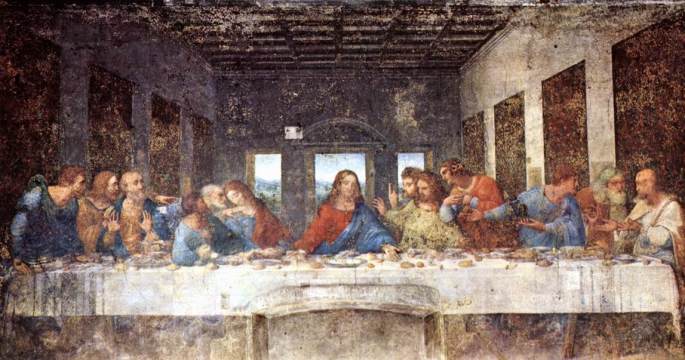
Matthew tells us in 26:26 that “As they were eating, Jesus took bread, blessed and broke it, gave it to the disciples…” Jesus and his disciples were eating the Passover dinner. These men had put in a full day, and it was time to eat for the evening. But this meal was special. This meal was significant, because it commemorated Israel being set free from bondage in Egypt. And unknown to the first participants this centuries old custom was about to be changed forever.

The first thing I want us to realize is the Last Supper was actually supper. For the Passover, Jewish law stated that the whole lamb and all food on the table was to be eaten, so the Lord’s Supper wasn’t just a little ceremony with a cracker and a teaspoon of grape juice. This was a part of a full on meal where Jesus chose to create a remembrance of the sacrifice he was about to make for all mankind.

When was the last time you paused at a meal and remembered the sacrifice that Jesus made for you? I’m not talking about thanking God for your food. I’m talking about taking a moment every time you eat to remember the sacrifice that Jesus made for you on the cross. Most of us eat several times a day, so what do you think it would do to our lives if we intentionally stopped to remember our Savior’s sacrifice each time we ate? How would it change the way we interact with, and think about others if we remembered the cross that frequently?

Commentator William Barclay had this to say about Matthew’s telling of the Last Supper.

“We might well say that what Jesus is teaching [us] is not only to assemble in church and to eat a ritual and symbolic Feast: He is telling them that every time they sit down to satisfy their hunger and to eat a meal, that meal is in memory of Him. For Jesus is not only Lord of the Communion Table: He must be Lord of the dinner table too.

Over the next several weeks we’ll take a close look at the Passover Seder, and the Lord’s Supper. There is a lot to learn from, and consider about this part of our service. Next week we will look closer at the institution of the Passover meal in Exodus 12. But this week, I want us all to take a moment and remember at our regular mealtimes what we do when we take the Lord’s Supper. It can be, and should be, life changing.

For further reading on this subject, you can visit Jews for Jesus, or Chabad.

Can We Trust The Bible?

When I was little I remember my grandmother teaching my cousins and me a game called “Telephone.” Someone comes up with a sentence and whispers it into the ear of the person next to them. This continues being passed through several silly, giggling child-interpreters until it reaches the original person. Everyone gets a huge laugh because what started as “The gray goose flies at night,” turns into “My granny has an overbite.”

Tweet: People struggle with the Bible because they believe it was passed down like a game of Telephone. The truth is far more stunning!

“The Bible can’t be trusted. It was copied by hand so many times that it must be full of mistakes. After thousands of years of errors we simply can’t trust what’s there!” The problem with this argument is the assumption that the Bible was copied much like you or I would scribble notes during a lecture, which is simply untrue.

Ancient scribes dedicated their lives to copying the Bible by hand, letter for letter, word for word, line for line. And this is very important to understand. Men who dedicated themselves to this artform had the scriptures memorized, as well as having a multitude of very early copies from which to work. Over 24,000 of these ancient copies remain from the New Testament alone, far more than any other writing of its age!

The scribes worked meticulously copying each and every detail of the text. It was then checked for accuracy by line. The chief scribes (who had the text memorized) knew exactly how many letters and words should be in each line of text for a particular book. If the copy in question didn’t match up, it was not corrected…it was destroyed. They held the text in such high esteem that they would rather destroy an expensive parchment and throw away the work rather than have one mistake come through their work.

That being said, not every scribe worked so perfectly. We do have “textual variants” within the scriptures. Most of these are sequence variations. In the book The Case for Christ by Lee Strobel, Dr. Bruce Metzger describes it this way. “…it makes a whale of a difference in English if you say ‘Dog bites man’ or ‘Man bites dog’ – sequence matters in English. But in Greek it doesn’t.” Greek is an inflected language, and no matter what order you place the words, the meaning still comes across the same. The meaning isn’t changed in the slightest, but this counts as a textual variant. And if 10 copies of this same variant exist, then scholars count that as 10 textual variants even though they are the same variant (confusing, I know.)

Can the Bible be trusted? Strobel quotes scholars Norman Geisler and William Nix’s conclusion: “The New Testament, then, has not only survived in more manuscripts than any other book from antiquity, but it has survived in a purer form than any other great book-a form that is 99.5 percent pure.”

God has preserved His word for us in a fully trustworthy form. All we have to do now is read it!

Want to know more about the Bible? Try these other posts:
The Problem with The Bible
Where Do I Start? – Part 1
Where Do I Start? – Part 2

Life Back Then

This was posted by John Mark Hicks this morning on Facebook. I thought it was too good to not share. We get to take a look into the early life of the church!

Letter of Mathetes to Diognetus (probably around 130-150 A.D.)

“Christians are indistinguishable from other people either by nationality, language or customs. They do not inhabit separate cities of their own, or speak a strange dialect, or follow some outlandish way of life….With regard to dress, food and manner of life in general, they follow the customs of whatever city they happen to be living in, whether it is Greek or foreign…And yet there is something extraordinary about their lives. They live in their own countries as though they were only passing through…Any country can be their homeland, but for them their homeland, wherever it may be, is a foreign country….They live in the flesh, but they are not governed by the desires of the flesh. They pass their days upon earth, but they are citizens of heaven. Obedient to the laws, they yet live on a level that transcends the law. Christians love all people….A blessing is their answer to abuse, deference their response to insult.”

1 Peter 2:12, “Conduct yourselves honorably among the nations, so that, though they malign you as evildoers, they may see your honorable deeds and glorify God when he comes to judge.”

Where Do I Start? – Part 2

From time to time people tell me they want to start reading the Bible, and they almost always share the same question… “Where do I start?” Last week we looked the way the Old Testament is organized, the purpose of the writings, and the topics covered. This week we’ll focus on the New Testament.

The first four books of the New Testament make up The Gospels (“gospel” means “good news.”) These books cover the life of Jesus, but they aren’t biographies you and I are used to. Matthew, Mark, and Luke are called the “synoptic gospels” because they are so similar in the content the events they cover, but each writer arranges the events in a different order so the story had the greatest impact on their original audience (very common to the writing style of the time.) John uses a different approach than the others for the same reason. All four books give us the details of Jesus’ ministry on the earth.

The book of Acts is written by Luke, the same man that wrote the Gospel of Luke. It’s a continuation of the Jesus story and it includes details about Jesus’ last days on earth, then covers the beginnings and spread of the first church. We see events and history recorded about the other writers of the New Testament, as well as read many stories of how early Christians cared for one another and were so dedicated to Christ that they were willing to face death because of their faith.

The Pauline Epistles is a fancy way of saying “Paul’s Letters.” These were letters written by Paul, an apostle that we first meet in Acts, to various churches that he worked with in Rome, Corinth, Galatia, Ephesus, Philippi, Colossae, Thessalonica, two letters to a young preacher named Timothy, and a letter written to a man named Philemon.

The General Letters function much the same way as Paul’s letters, they just weren’t written by Paul. These writings include an anonymous letter called Hebrews, a letter from James, the earthly brother of Jesus, two letters from the apostle Peter, and three from the apostle John.

The final book in the New Testament is the book of Revelation where the apostle John recounts a vision that he had from God. He writes specific warnings from Jesus for seven churches in Asia, as well as a very apocalyptic description of God’s ultimate victory over evil, as well as a beautiful description of Heaven.

Hopefully these past two posts have given you some insight into the organization of the writings contained in the Bible. “So where do I start?”  Well, it depends. If you have never read the Bible before, I always recommend The Gospel of John near the beginning of the New Testament. John does a fantastic job of sharing the life of Jesus with his readers.

If you’re looking for specific answers to questions you have, you can use this summary to look on your own, do a search on BibleGateway, or you can always email me.

Next time we’ll discuss if the Bible can be trusted.


Where Do I Start?

From time to time people tell me they want to start reading the Bible, and they almost always share the same question… “Where do I start?”

Last week we talked about how the Bible isn’t just another book. It’s really a collection of writings, and those writings are organized a certain way within the book. Most books are sequential, or chronological in nature. The Bible doesn’t work that way. It’s grouped by type. Let me show you what I mean. We’ll begin with the Old Testament.

The first five books of the Bible make up The Law of Moses (also known as the Pentateuch or the Torah.) These books were compiled and written by Moses and incorporate the earliest history of the Israelites, as well as the books of the law of the covenant between God and his people (such as the 10 commandments.)

The History of Israel is recorded in the next twelve books from Joshua to Esther. Within these writings you can learn about the history of God’s interaction with the Israelites. From entering the promised land, to great battles. Most people know these writings through stories they were taught in Sunday School or Vacation Bible School growing up.

Poetry and Wisdom Literature makes up the next 5 books from Job through Song of Songs. In this section you will find beautiful writings of people who are struggling with God and the pain of this world, songs of praise for God, a graphic description of a man’s love for his wife, and a collection of wise sayings.

The Major Prophets are known as such because their prophecies played a major part in the life of Israel. Many of these writings are quoted by the writers of the New Testament. These books from Isaiah through Daniel foretell of the coming of the Messiah, and include many warnings and depictions of the captivities and destruction that Israel would face in the future because of their disobedience to God.

In a similar way, The Minor Prophets from Hosea through Malachi describe more minor events and prophecies from the history of Israel. These books aren’t any less important, but are more specific in their writings and application. The well known story of Jonah is found here, as well as the rebuilding of Jerusalem after the Babylonian exile.

If you are interested in the history of Israel, studying the long anticipated coming of the Messiah, or want to read some beautiful poetry, you can find what you are looking for in the Old Testament. Click Here to read part two about the New Testament.