Idolatry and the Church

Late Saturday afternoon I was paralyzed with a thought…a realization…an all consuming alarm going off in my head, and a knot in the pit of my stomach that just wouldn’t let go. This same thought had floated through my mind on and off over the course of the last 6 months, but today it hit me like a ton of bricks. And I can’t ignore it any more.

I’ll be preaching from Exodus Sunday morning from a text most people think they are familiar with. After God performs many signs and wonders against Egypt, after Israel crosses through the sea, and after God provides for them in the wilderness, the people arrive at Mount Sinai. A beautiful and powerful covenant ceremony takes place…a wedding if you will between God and the people of Israel. This is where we receive the 10 Commandments in the Exodus narrative. They begin like this:

20:1  God spoke all these words: 

20:2 “I, the LORD, am your God, who brought you from the land of Egypt, from the house of slavery. 

20:3 “You shall have no other gods before me. 

20:4 “You shall not make for yourself a carved image or any likeness of anything that is in heaven above or that is on the earth beneath or that is in the water below.20:5 You shall not bow down to them or serve them, for I, the LORD, your God, am a jealous God, responding to the transgression of fathers by dealing with children to the third and fourth generations of those who reject me,20:6 and showing covenant faithfulness to a thousand generations of those who love me and keep my commandments. 

Ex 20:1–6 NET

After we read the 10 Commandments, we hear the voice of the nation of Israel speaking to Moses:

“You speak to us and we will listen, but do not let God speak with us, lest we die.”

Ex 20:19 NET

Did you follow that? The first thing God wants them to do is recognize that He is the one who brought them out of Egypt. They should not worship any other deity, nor try to capture or constrain Him to some sort of created image. That’s what everyone else in their part of the world would do, but this is not what they are called to do. And their response is that they don’t want to hear directly from their Savior. The Creator of heaven and earth is willing to speak directly to them, and they don’t want to hear it.

After God finishes talking to Moses, the very next thing to happen after this wedding scene is sin. Aaron (co-leader of Israel along with Moses and Miriam, the priest who just finished dining in the very presence of God) makes a golden calf idol for the people to worship. But notice what the text tells us:

Then they said, “These are your gods, O Israel, who brought you up out of Egypt.” 

32:5 When Aaron saw this, he built an altar before it, and Aaron made a proclamation and said, “Tomorrow will be a feast to the LORD.” 32:6 So they got up early on the next day and offered up burnt offerings and brought peace offerings, and the people sat down to eat and drink, and they rose up to play. 

Ex 32:4–6 NET

Do you hear the Garden of Eden narrative ringing in your ears within this story? The very first directive God gives Adam and Eve is to not eat this fruit. What’s the first thing they do? They eat the fruit.

The first directive God gives Israel is that He is the one who brought them out of Egypt, so don’t worship any other gods or make an image of him. What’s the first thing they do? In their own context, they eat the fruit. God wants his people to be a “kingdom of priests” who are different from the world around them in order to lead the world to God. But Israel chose to be just like the world.

Now fast forward to today. COVID plagued election season in America.

God has called his church to be a “priesthood” so that we might “proclaim the virtues” of Christ and lead the world to him. But just like Israel, the church has chosen to be just like the world. “Christians” are routinely bowing their knees to a golden donkey or elephant while proclaiming that this is the only hope our world has.

The church has bowed to a golden calf instead of humbly leading the world in worship of our Savior, Jesus the Messiah. Instead of pointing to the cross and the empty tomb, we’ve been pointing to our chosen candidate as if they were gods.

We are also good about pointing to ourselves saying “look what we have made!” When it comes to reaching the lost we focus on programs, and music, and skilled speaking, and comfortable buildings, and coffee bars, and awesome children’s wings, and flashy websites, and social media…the list goes on and on and on. And don’t hear me saying that those things are inherently bad. They are not! Very good things can come from all of them. But when we start thinking that the power to reach the lost comes from that list of things instead of the Holy Spirit’s work on the hearts of the lost bathed in the prayers of the saints, we have bowed our knee to the golden calf.

When did we stop trusting God? When did we stop believing in God’s active role in our world? When did we trade our mission of being the hands and feet of Christ for the cheap substitute of producing an entertaining show?

The last word that Jesus has for the disciples in Matthew’s Gospel is to “Go and make disciples.” And we are all too often comfortable with sitting inside of a nice church building and politely whispering “Ya’ll come!” And now that God has allowed our world to be upended, and our worship routines to be disrupted, our instinct has been to immediately return to the “Ya’ll come” comfort we had in February.

But instead of focusing on how we can get people back at the church building post-COVID, maybe we should focus on how we can get out membership out of our buildings and reach the lost in our communities. Perhaps one of the byproducts of us all dealing with this routine altering plague is that God is sick and tired of our routine!

Sisters and Brothers, it’s time that we stop being just like the world around us. Trusting in the trappings of this world in order to save the lost is worshiping the golden calf. We must be the people of God who get outside of the building and shine His light in the darkness of the world that surrounds us. It’s time that we obey our Savior’s voice and “Go and make disciples,” not stay and wait for the lost to show up. It’s time to stop putting our hope in routines and resources of our own making, and begin prayerfully pleading for the courage and wisdom to fulfill our mission to the lost.

Long story short: Stop bowing to the golden calf.

The Story of the Bible

One of the most repeated story lines in the Hebrew Scriptures:

God’s chosen people are to be a blessing to the nations. In response to an outcry of violence, they are rescued through the waters because of evil. They then offer intercession so that God’s covenant blessing can go out to the nations.

This storyline is repeated time and time again (Noah, Abraham, Moses, Joshua, Jonah, etc.)Over and over again you see this pattern (with minor variations) repeat itself.

And by the end of the story you realize the people need a new Noah, a new Abraham, a new Moses, a new Joshua, a new David, a new Elijah, etc.

And the one the New Testament writers portray as all of those “new” people is Jesus.

And Jesus reminds God’s chosen people that they are to be a blessing to the nations. An outcry of violence and a rescue through the waters because of evil ensues. And Jesus offers intercession so that God’s new covenant blessing can go out to the nations.

This is the way the New Testament writers read their Bible. Perhaps it’s the way we should read our Bible too.

Forgiveness and the Heart of God

Prayer is less about getting God to do something we want, and more about getting ourselves in tune with who God wants us to be.

When Jesus said “When you pray, say…” I believe he meant it. There is something transformational about the commanded words that Jesus gives us within the Lord’s Prayer…but they aren’t given for us to speak in order to transform God. They are given so that by saying, reflecting, and absorbing these words into our hearts we can be transformed to where our very longings resonate with the heart of God.

Simply put, every desire of our heart cries out “Your kingdom come!”

Close to the heart of our God is forgiveness. When Yahweh draws near to Moses on Mount Sinai, he reveals himself as follows:

“The LORD, the LORD, the compassionate and gracious God, slow to anger, and abounding in loyal love and faithfulness, keeping loyal love for thousands, forgiving iniquity and transgression and sin. But he by no means leaves the guilty unpunished, responding to the transgression of fathers by dealing with children and children’s children, to the third and fourth generation.”

Exodus 34:6-7 NET

Notice that part of God’s hesed (“loyal love”) is that he forgives iniquity and transgression and sin. This is huge! When God introduces himself and represents his character in words, it includes compassion, grace, loyal love, faithfulness, and forgiveness! What an amazing God!

But God is no push over either. When you choose to be his enemy and reject his covenant, then punishment comes. God is generous, abounding in grace and willing to forgive wrong, but he will not force his forgiveness on those who don’t want it. 

Forgive us our sins, 
for we also forgive everyone who sins against us.

Luke 11:4 NIV

God is willing to forgive our sins, and we should realize that our sins are many. God is willing to forgive! And God wants our hearts to be like his. The two lines of this statement are connected. We ask God to forgive because (Greek: gar) we forgive. 

We must have a forgiving heart toward those who have sinned against us in order to receive forgiveness from God. This is the way Jesus teaches us to pray for forgiveness. Our forgiveness depends on our willingness to adopt God’s posture of forgiveness towards others.

So if you still harbor unforgiveness towards others, now is the time to ask God to soften your heart and help you forgive as he does. It’s clear that forgiveness is important to God. Is it important to you?

Prayer: What is it Good For?

Have you ever struggled with how to pray? Have you ever felt like you are supposed to say nice things and be thankful, but you really don’t know how to do that? You’re not alone.

Jesus’ followers asked him to teach them how to pray. It was (and still is) very common in the Jewish world to have memorized prayers for different situations. There was a routine set of prayers that you used every day, and in every situation in which you find yourself. Acts shows us that the early church continued the practice of “the prayers.” (Acts 2:42, 3:1, etc.)

Because of this practice, it’s no wonder that Jesus’ followers wanted their Rabbi to teach them a prayer. Afterall, John had done that for his disciples. (Luke 11:1) And in Luke’s account, due to their request, Jesus gives them a prayer to recite.

 “When you pray, say: 

“ ‘Father, 

hallowed be your name, 

your kingdom come. 

Give us each day our daily bread. 

Forgive us our sins, 

for we also forgive everyone who sins against us. g 

And lead us not into temptation.’ ” 

 Lk 11:2–4 NIV

Notice that it’s Jesus’ expectation that his disciples will pray these exact words. For some reason in my past that rote prayers became akin to vain repetitions, but Jesus doesn’t see it that way at all! He expects his disciples to repeat these words over and over again. “When you pray, say…” The Greek word for “when” is hotan, which means “whenever.” Jesus wanted his disciples to pray this prayer over and over and over again until it became second nature to them.

Why? Because in this prayer we find the heart of Jesus revealed. What he prayed for is of first importance to him and his mission, as it should be for us today when we recite this prayer. In his book You Are What You Love: The Spiritual Power of Habit, James K. A. Smith talks about the habitual practices we all encounter every day. Even your morning routine, or work routine, or shopping routine, or school routine program and shape you into a product of the world, not a product of the Kingdom. We need reprogramming, and Spiritual habits like prayer do just that!

“If our loves can be disordered by secular [routines], it’s also true that our loves need to be reordered (recalibrated) by [counterroutines]–embodied, communal practices that are ‘loaded’ with the gospel and indexed to God and his kingdom.”

You Are What You Love: The Spiritual Power of Habit by James K. A. Smith, pgs. 57-58

This is exactly what prayer, and specifically the Lord’s Prayer, is designed to do in our life. Prayer isn’t so much moving God into our will, but being shaped into the mission and will of the Father.

I hope you’ll join us Sunday morning at 9:30 CST as we talk about Prayer: Grasping the Heart of God.

Do Not Be Afraid? – Part 2

Do not be afraid of those who kill the body but cannot kill the soul. Rather, be afraid of the One who can destroy both soul and body in hell.

Matthew 10:27–28 NIV

Notice that Jesus does not teach his disciples that fear is wrong, but rather he reorients their thinking. In Matthew 10 Jesus is sending his disciples out into a world that was hostile to his message. Powerful people were already plotting to kill Jesus, and those speaking in his name would likewise be in danger. Within that context, Jesus commissions his followers to not back down from the mission they have been given. They are to proclaim that “the kingdom of heaven has come near,” and they should not abandon their mission just because it was dangerous. 

But notice also that Jesus never promises to keep these disciples safe. He never says that God is safe! He reminds them that the death they would face in their mission might kill their body, but blowing off their mission would face eternal consequences from God!

I confessed on Sunday morning that for years I read this passage as a reassurance that God would never let anything bad happen to me as long as I was doing what he asked me to do. That’s exactly the opposite of what Jesus is saying! Look at the very next verse.

Are not two sparrows sold for a penny? Yet not one of them will fall to the ground outside your Father’s care.

Matthew 10:29 NIV

Jesus never tells us the sparrows won’t fall. God will not keep the sparrow from falling, but he will care for that sparrow as it falls.

Our focus should not be on if we will fall, rather we should focus on whose arms we are falling into.

Our mission is dangerous. Our calling is not safe. But we should not fear what will happen to us in this life. We are worth more than many sparrows, and we will not fall outside of our Father’s care. We should, however, fear the consequences of not carrying out our mission. Disowning Jesus means he will disown us. Living as disciples of Jesus means we have nothing to fear.

If there’s anything in this passage that causes you fear, then there are things that need to change in your life. 

Focus on your mission. Focus on your Father. Focus on Jesus, and don’t be afraid.

Finding Unity in Diversity

Most congregations don’t understand unity. We understand uniformity, but not unity. This is why we have so many church buildings, each full of people who are largely the same with very little difference. If you like this music, go to that church. If you like this translation of the Bible, go to that other church. Most congregations understand uniformity, but not unity.

The Apostle Paul sought unity in the church through diversity, a very different approach than we usually see today. Romans 14 speaks a great deal about how Christians find unity in their mission through Christ while still embracing different practices and beliefs! Though the setting is a bit different in Romans, the application is much needed in the American church today.

 One person’s faith allows them to eat anything, but another, whose faith is weak, eats only vegetables. The one who eats everything must not treat with contempt the one who does not, and the one who does not eat everything must not judge the one who does, for God has accepted them. Who are you to judge someone else’s servant? To their own master, servants stand or fall. And they will stand, for the Lord is able to make them stand. 

Romans 14:2–4 NIV

Notice that Paul does not attempt to get everyone to see things the same way. Rather he reminds them that they all belong to Christ and will all be judged by God. It is not your job, nor my job to judge others (v. 13). Instead, Paul reminds the believers that everything they do should be focused on peace and building each other up (v. 19). And to further clarify that Paul expects the practices of the church to be diverse, he reminds people that wrong to feel pressured into doing things against their beliefs.

So whatever you believe about these things keep between yourself and God. Blessed is the one who does not condemn himself by what he approves. But whoever has doubts is condemned if they eat, because their eating is not from faith; and everything that does not come from faith is sin. 

Romans 14:22–23 NIV

So how does this apply to today? As we come back together in our places of worship (as East Side has already done) we will have some that think we should have stayed open the entire time, and others that still don’t think it’s safe to meet in public. And Paul would say this is fine. And neither group should condemn or pressure the other. Wear a mask or not? Same answer. Join a peaceful protest? Same answer. Voting? Same answer.

There is room for difference of opinion in the Kingdom of God. There is room for difference of practice in the Church of Jesus. But there is no room for disunity, accusing, arguing, fighting, and disfellowshipping over these differences. Those don’t come from faith, but from sin (v.23).

“Let us therefore make every effort to do what leads to peace and to mutual edification.”

Romans 14:19 NIV

Your Words Matter

For this is the message you heard from the beginning: We should love one another.

1 John 1:11 NIV


As you have hopefully heard by this point, we will once again have a time of worship at our building this Sunday (May 10th).

With that announcement comes lots of feelings, questions, worries, and opinions. Let me start by affirming whatever you are feeling as normal during this time. Our world is dealing with lots of unknown variables, and truthfully the only One who understands it all is the Father. We all are doing the best we know how with the information we have.

I want us all to remember, especially now, that followers of Jesus are called to be different than the world around us. We are to be a calming presence in the storm, not the source of the chaos. You have been called to make peace “as far as it depends on you.”

Please remember that you represent Jesus in your comments and your actions. When non-believers see you and your actions, they assume that’s how Jesus would act. Please be a good representative of our Lord, especially now as the world looks for answers. Let’s show them Jesus! To that end, I leave you with the words of John.

Dear friends, let us love one another, for love comes from God. Everyone who loves has been born of God and knows God. Whoever does not love does not know God, because God is love. This is how God showed his love among us: He sent his one and only Son into the world that we might live through him. This is love: not that we loved God, but that he loved us and sent his Son as an atoning sacrifice for our sins. Dear friends, since God so loved us, we also ought to love one another. No one has ever seen God; but if we love one another, God lives in us and his love is made complete in us.

1 John 4:7-12 NIV

Peace in a Chaotic World

This morning we turn our attention to Psalm 37. Though our situation differs from David, the wisdom of his psalm is needed today.

In this psalm, David laments the actions of wicked people who oppose him and his kingdom. David admonishes righteous behavior and trust in Yahweh for deliverance. It’s clear from the text that David and “the righteous” with him are deeply concerned about the “wicked” and “wrongdoers” prospering. This is David’s pressing issue.

And yet the wisdom of the Spirit that David records is the same wisdom our world needs today.

Do not fret…” 37:1
“Trust in the LORD and do good;….” 37:3
“Commit your ways to the LORD; trust in him and he will do this…” 37:5
“Be still before the LORD and wait patiently for him; do not fret…” 37:7
“Refrain from anger and turn from wrath; do not fret – it only leads to evil.” 37:8

Do you catch that last one? Fret/worry only leads to evil? Notice how David is encouraging us to have a quiet spirit? Yes his situation is different from ours, but the needed prescription is the same. When we choose fret and worry over trust in God, evil results.

Most people are displaying everything but a quiet spirit right now. As a nation we are simultaneously worried, angry, anxious, exhausted, and frustrated. The news media certainly doesn’t help.

I visited a news website today (which I never do) and learned from highlighted headlines that I should be very worried. If not about Coronavirus, then the upcoming election. If not about politics, then national safety because a foreign country may or may not have a new leader. And if there is a new leader, who knows who it will be and how bad it might get? And if you are at home and not concerned with politics at all, keep worrying! Someone shot at a house somewhere recently, so you should worry about your safety in your own home.

And all this was from less than a minute on this news website.

My encouragement to you, is the same as that of David through this psalm: pursue a quiet spirit and trust in God to save. Whatever worry, anxiety, or “fret” that comes from this life is nothing compared to the peace that is found by placing out trust, and hope in God. This is the prescription that our world desperately needs.

I close with the final verses of Psalm 37 as an encouragement for the week ahead.

Consider the blameless, observe the upright;
a future awaits those who seek peace.
But all sinners will be destroyed;
there will be no future for the wicked.

The salvation of the righteous comes from the LORD;
he is their stronghold in time of trouble.
The LORD helps them and delivers them;
he delivers them from the wicked and saves them,
because they take refuge in him.

Psalm 37:37-40 NIV

May we choose peace, and take our refuge in God alone. Shalom.

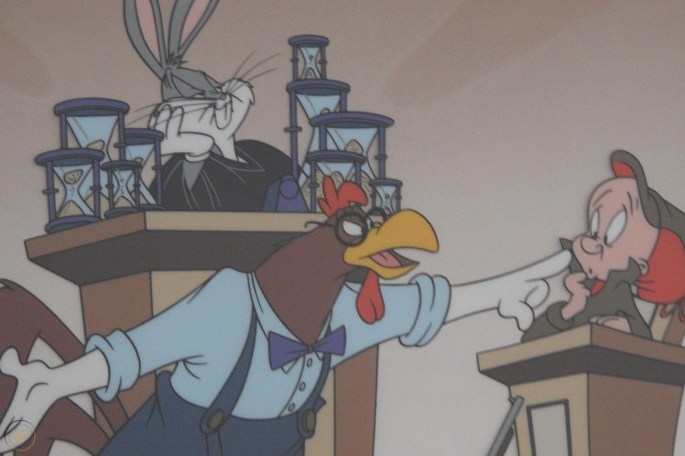
What Bugs Bunny Can Teach Us About Following Jesus

“Do not judge, or you too will be judged. For in the same way you judge others, you will be judged, and with the measure you use, it will be measured to you.”

Matthew 7:1-2 NIV

A quick glance at Facebook has shown me that we need this reminder desperately.

Over the past few days I’ve read folks from all political backgrounds judging political leaders, judging neighbors, and judging complete strangers. Disagreement is not judgement. Judgement comes when intent is assigned by someone other than the key figure in question. Let me see if I can clarify using a non-political example.

Bugs Bunny stated this week that he will not be eating green beans for lunch today.

Now you may very much be in favor of everyone eating green beans at every meal. That’s fine. And you are free to express that opinion. Let me give you an example of a completely Christ-like way to do so.

“I disagree with Mr. Bunny’s choice to not eat green beans. I also realize that he has the ability to make choices for himself. Because I follow Jesus, I choose to love my neighbor, and I certainly consider Mr. Bunny my neighbor. I will be praying for him, his family and friends, and I will continuing to eat green beans at every meal. I encourage you to do the same.”

See how easy that was? We expressed our disagreement, but showed kindness toward Mr. Bunny, as well as shining the light of Christ.

Here’s an example of what not to do.

“Stupid Bunny won’t do what we all know he should do. He does this because he hates green bean farmers, hates Looney Toon Land, and doesn’t give a rip about you or me. And anyone who would support him is just as evil as he is.”

Notice how this example assigns intent to Mr. Bunny when Mr. Bunny himself never said why he isn’t eating green beans. Perhaps Mr. Bunny was simply out of green beans. Or perhaps he’s allergic. The idea that he would only do something because of the reason you have chosen to supply is judging him. Jesus says we should not do that.

Now this whole exercise might seem very childish, but it’s clear that this concept hasn’t been grasped by many, and therefore I don’t want to write anything that’s confusing. We are called to not judge.

Our job as followers of Christ is to love. Love those you agree with, and love those you disagree with. Love those you know personally, and love those whom you have never met. This is how people will know you are actually a follower of Jesus.

One last thought.

“So in everything, do to others what you would have them do to you, for this sums up the Law and the Prophets.”

Matthew 7:12 NIV

Take a recent example from your own life. Maybe a recent conversation you had with someone. Perhaps a Facebook or Twitter post you wrote about someone. Would you want someone to talk about you the way you did in your conversation/post?

Let’s take it a step further. You will one day be judged eternally by Jesus himself (Mt. 25:31-46) And since he’s already told us that we will be judged in the same way we judge others (Mt. 7:1-2), then do you really want Jesus judging you the way you just judged someone?

As followers of Christ we are commanded to love one another (basically all of 1 John), and to not judge others.

May our thoughts, our words, our social media posts, and our conversations with others reflect the mercy we have been shown in Christ Jesus.

Easter Isn’t Over

As I look ahead to my sermon text for Sunday (Acts 1:1-14), I’m reminded of the need to not rush past Easter.

Our tradition has never focused much on the liturgical calendar, but we are in the season of Easter. That’s correct, Easter is a season. We live in light of the resurrection. The tomb is still empty, and this time of year teaches us to live in light of the resurrection.

This was a challenge to the apostles in the days following the resurrection. We know this by looking at the questions they ask the risen Jesus.

Then they gathered around him and asked him, “Lord, are you at this time going to restore the kingdom to Israel?”

Acts 1:6 NIV

Restoration is a beautiful idea, but the resurrection isn’t about restoration. It’s about transformation. The apostles were hoping for a restoration of an old system, but Jesus was focused on a transformation of his followers on the resurrection side of the cross. Rather than living in the shadow of the grave, we live in the light of the resurrection!

Restoration is about preserving the old. Resurrection is about being transformed into something new.

So how do we live in a season of resurrection? Perhaps we begin living as the new creation that God intends us to be in Christ. Paul summarizes our mission this way.

Therefore, if anyone is in Christ, the new creation has come: The old has gone, the new is here! All this is from God, who reconciled us to himself through Christ and gave us the ministry of reconciliation: that God was reconciling the world to himself in Christ, not counting people’s sins against them. And he has committed to us the message of reconciliation. We are therefore Christ’s ambassadors, as though God were making his appeal through us. We implore you on Christ’s behalf: Be reconciled to God. God made him who had no sin to be sin for us, so that in him we might become the righteousness of God.

2 Corinthians 5:17-21 NIV

“…we might become the righteousness of God.” Notice the transformation language? God doesn’t want to restore the old, he wants us to become a new creation.

As ambassadors of Christ we call people forward into the new, but we ourselves must first be living as new creatures. We don’t live in the past, we don’t operate in our old thinking, we don’t stay stuck in the pain and shame of past wrongs. We are made new, and we walk forward in that newness of life.

This week I encourage you to live in light of the resurrection. Leave your past in the past, and move forward as a new creation, transformed by the hope of the empty tomb. He is risen! And that truth is what makes new creation possible in our lives.