
Daily Psalms – Psalm 8

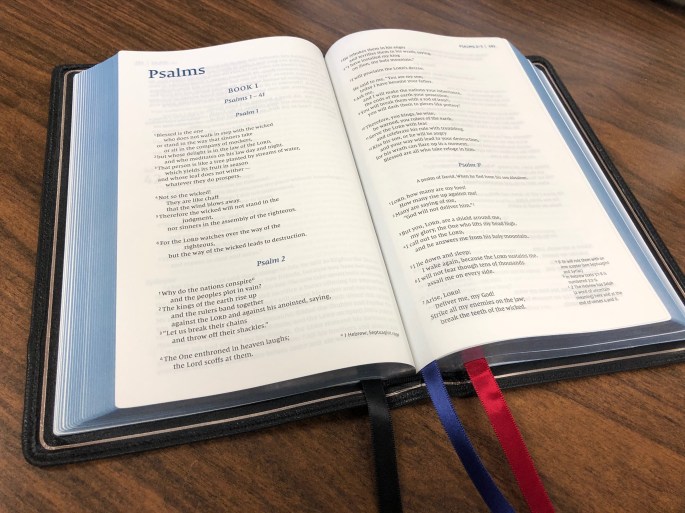
Daily Psalm Reading – Psalms 6-10

Today we will spend some time reflecting on Psalm 8, a psalm of David that is closely tied to the narrative of both Job, and the writer of Hebrews (as well as several other passages in Scripture.)

Psalm 8 is the first psalm of praise in the psalter, and comes at the end of a series of Psalms about suffering (Ps. 3-7) that certainly resonate with Job. Yet just like Job, the Psalter brings us into a time of great praise of Yahweh at the end of the suffering, almost as if the suffering itself has allowed us to see God’s glory and majesty in every aspect of creation, and the result is praise!

I think the key to understanding Psalm 8 is verse 4:

“…what is mankind that you are mindful of them, human beings that you care for them?”

Psalm 8:4 NIV

Again, this verse resonates with Job’s questions as well:

“What is mankind that you make so much of them, that you give them so much attention…”

Job 7:17 NIV

When we consider the vastness of creation, the glory of God proclaimed in the heavens, why in the world would God care so much for us?

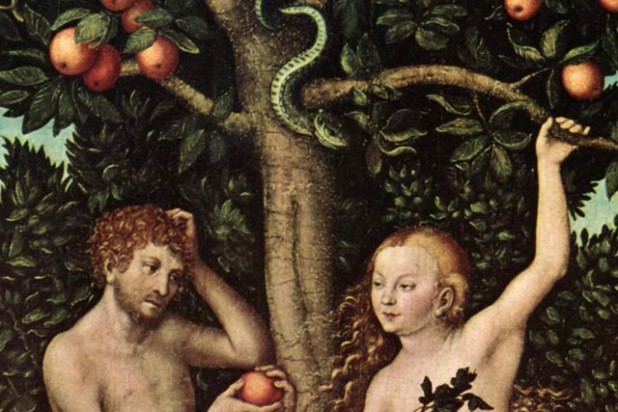
Verses 5-8 answer the question posed in verse 4 by returning to the Garden of Eden and the mission we are given to co-rule creation with Yahweh (Gen. 1:26-28). David then lists out all the creatures from the days of creation (Gen. 1). God has subjected creation to us! He created us to co-rule creation with him. What an awesome responsibility!

This is the imagery that the writer of Hebrews draws upon, directly quoting verses 4-6, and then makes the following statements:

“In putting everything under them (mankind), God left nothing that is not subject to them. Yet at present we do not see everything subject to them. But we do see Jesus, who was made lower than the angels for a little while, now crowned with glory and honor because he suffered death…the pioneer of our salvation perfect through what he suffered.”

Hebrews 2:8-9, 10 NIV

Psalm 1 gives us a great picture of who the Messiah should be; one who mediates on God’s scripture day and night. Psalm 2 ends by telling us “Blessed are all who take refuge in him (Messianic King).” Then we see a period of suffering in Psalms 3-7, and Psalm 8 celebrates that humanity has all creation subject to them, and the Hebrew writer points that image to Jesus, the firstfruits of the resurrection. We too will ultimately join with Jesus in our resurrection, but at the moment we are still bound by the constraints of our human bodies, and the effects of sin in our lives.

But for now we do have a job. We have responsibility from Yahweh to co-rule creation under the Lordship of our Messiah Jesus, in order to establish his kingdom “on earth as it is in heaven.” Since everything has already been subjected to Jesus (including you and me), we serve at his pleasure. We follow him and him alone! We carry out his mission on earth.

What an awesome responsibility we have! And the only fitting answer to such an awesome responsibility is praise!

“Yahweh, our Lord, how majestic is your name in all the earth!”

Psalm 8:9

Blessings!
DAILY PSALM READING – PSALMS 6-10

Daily Psalms – Psalm 1

I’ve started doing something on Facebook recently that I will now carry over to my blog: A daily Psalm meditation in conjunction with my daily psalm readings. I picked up a practice from N.T. Wright some time back of daily reading the psalms. I read 5 Psalms per day, and begin and end each day by reading and meditating on them. 5 psalms per day X 30 days per month = 150 psalms. Thus, each month (we flex a bit for February) we read through the entire Psalter. Why? I really appreciate Dr. Tim Mackie’s summary of the Psalms:

Psalms: The prayerbook of God’s people who are striving to be faithful to the Torah, and waiting for the Messianic Kingdom.

Dr. Tim Mackie – The Bible Project

“But wait, didn’t the Messianic Kingdom come at Pentecost? After all Jesus has already established his church!” The answer to that is Yes, and No. The kingdom is here, and not yet. While it has been established, we eagerly await his return to destroy evil once and for all, and establish the new Jerusalem where all of God’s people will spend eternity with him (read the end of Revelation if this is new material for you.)

So in a way we are just like those original readers of the Psalter who are awaiting the Messiah to set everything straight, though we have the advantage of knowing our Messiah Jesus and his teachings as we wait for his ultimate return. In addition, the Psalms are what Jesus would have meditated on in his lifetime. These were the worship songs of his day. As a Jewish boy he would have memorized the entire psalter. The words of the Psalms saturated the mind, heart, and life of Jesus. Shouldn’t we seek to have them do the same for us?

Each day I’ll choose one psalm from my daily reading and reflect/meditate on it a bit. My hope is that after 5 months I will have written at least a little reflection on the entire Psalter. Today we will look at Psalm 1. I memorized this psalm in middle school for a competition, and it has never left my memory. Probably my favorite psalm.

In Psalm 1 we have the anonymous psalmist reminding us that it is meditation on the word of Yahweh that leads to life. In contrast, the psalmist looks at the wicked and says they are “like chaff.” If you are unfamiliar with that term, chaff is the little shell that encases a grain of wheat. In the process of harvesting the wheat, the chaff is removed from the grain through a process called “winnowing” where the wheat is thrown into the air which separates the grain from the chaff. The wind blows away the light chaff, but the grain falls back down to the ground and is used.

In other words, the wicked are compared to useless the useless byproduct of wheat that isn’t fit for consumption. They will be “blown away” and destroyed. But those who dwell on the Torah of Yahweh are like a never ending source of nourishment and peace. It’s almost as if the arrangers of the psalter are saying, “Spend time in this book and you will be a blessing to everyone as you yourself are blessed by God in doing so.”

Spend time in Scripture. Spend time in the Psalms. Spend time in the Gospels. Spend time getting the story and the very words of Jesus in your head and your heart. And you will be blessed, and be a blessing, in doing so. Grace and Peace.

Click here for today’s reading of Psalms 1-5

Eve: Equality with Adam

Today we will begin a series of articles that will focus on the women of the Bible. I must confess that for many years I read the Bible without noticing many of these names and their significance to God’s story, but they are significant to God’s story! Knowing the stories of these women is vitally important to understanding the nature of God. Based on a show-of-hands poll at a recent Bible conference I attended, many (including some in ministry) don’t know these stories even though the Spirit placed them in the pages of the Bible. I hope in some small way these articles will begin to change that. The first woman we will look at is not a stranger to most. In fact she’s the first woman of all: Eve.

Eve has received a lot of blame, scorn, and shame throughout the centuries even though she did what you and I do virtually every day – Eve disobeyed God. For some reason scholars and believers have tried to make Eve somehow fundamentally less than Adam, though that was certainly not how God viewed things. Eve was created equal to Adam. She is just as important to God’s story as he. Consider the following verses:

So God created mankind in his own image, in the image of God he created them; male and female he created them.

Genesis 1:27 NIV

Notice that both Adam and Eve are created fully in the image of God. Notice also that they are one: mankind. Nowhere in the story is it even hinted that Eve is somehow less than Adam. Our roles of gender inequality have been heavily influenced by Plato and Aristotle who believed that women were sub-human, less human than men (see Politics 1.1260a). For years we’ve read this worldview onto the story of Eve, as well as other women in Scripture.

The Lord God said, “It is not good for the man to be alone. I will make a helper suitable for him.”

Genesis 2:18 NIV

Time for a Hebrew lesson. The Hebrew phrase translated here as “helper suitable” and in other translations “help meet” is ezer kenegdo. Many look at this phrase from an English standpoint and say this means Eve was less than Adam because she was his helper. The problem with that is that God himself is referred to as our ezer (helper) in a number of places in Scripture (see Ps. 33:20 for example). Does that mean that God is somehow less than us because he helps us? Quite the contrary! He is more powerful than us which means he can help us! God himself is the only other ezer in all of Scripture: God & Eve! The word kenegdo regulates ezer by indicating that this is a helper in likeness, someone who is like the other that can help. According to Dr. Kindy DeLong, without kenegdo a Hebrew reader would have to assume that Eve was more powerful than Adam, but kenegdo shows equality.

Nothing in Genesis 1 or 2 indicates that Eve is somehow inferior to Adam. In fact, it proves quite the opposite. Both Adam and Eve are fully created in the image of God. Eve is a “helper” (ezer) for Adam just as God is a “helper” (ezer) for the psalmist. Instead of God being superior to the psalmist, Eve here is portrayed as equal (kenegdo) to Adam. Next week we’ll look at Genesis 3, and how the New Testament uses that story.

Question to consider: Who sinned first? Adam or Eve? (hint: re-read Gen. 1-3)

Much of the content of this article was inspired by a lecture i attended given by Dr. Kindy DeLong during Harbor 2019 at Pepperdine University. You can listen to the lecture by clicking here.

Connections: The Passover and the Lord’s Supper – Part 5

Last week we explored the significance of the blood being applied to the doorposts of the houses of Israel. God had spared the children of Israel because the blood of the Passover lamb had been applied to their homes. In this article we will look at the wine used in the Passover celebration, and the symbolism that Jesus applied in the Lord’s Supper.

A cup of wine is not mentioned in Exodus 12, and nobody really knows when this tradition was added to the celebration, but it was in place by Jesus’ time, and two references are made to drinking from it as part of the ceremony. (Luke 22:17, 20) The participants of the Passover celebration each have a cup of wine, and on four separate occasions would use the wine in their cup. Each time the cup has a specific name and symbolic significance in the ceremony.

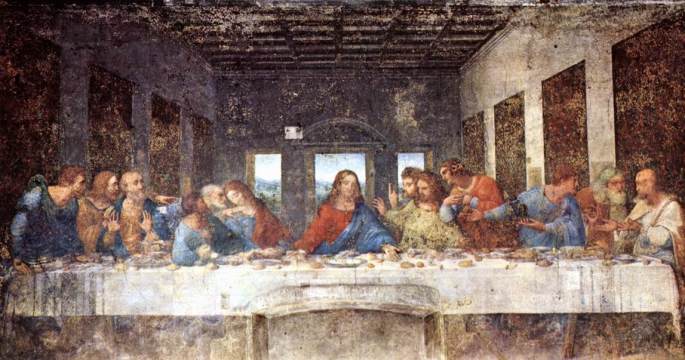
The first cup which opens the meal is called Kiddush which means sanctification. A blessing was given thanking God for the “fruit of the vine” before taking this cup. Most likely this is the drink referenced in Luke 22:17-18 –  Then he took a cup, and after giving thanks, he said, “Take this and share it among yourselves. For I tell you, from now on I will not drink of the fruit of the vine until the kingdom of God comes.”

The second cup was known as the cup of plagues which reminded the Jews of the wrath of God poured out on the Egyptians in the form of the ten plagues. This was not a drink from the cup, but rather a dipping of the finger, and a drop of the wine on their plates for each of the ten plagues.

The third cup comes right after supper. This cup is mentioned specifically in Luke 22:20 – In the same way he also took the cup after supper and said, “This cup is the new covenant in my blood, which is poured out for you.” This third Passover cup is known as the Geulah which means redemption, and is sometimes called the cup of blessing. (We’ll explore a New Testament reference to the cup of blessing next time.)

The fourth cup known as the Hallel or the cup of praise accompanied the singing of hymns. These hymns are in your Bible as Psalm 113-118. I don’t have room to include these passages here, but you should read through them to see what Jesus sung just before he was arrested. And though this fourth cup is not mentioned specifically, it would have been taken with the hymns sung by Jesus and his disciples. (Mt. 26:30, Mk. 14:26)

Christians don’t usually pick up on the statement Jesus was making when he used the phrase “new covenant in my blood.” This phrase is only used once in the Old Testament in Jeremiah 31:31-34. “Look, the days are coming”—this is the Lord’s declaration—“when I will make a new covenant with the house of Israel and with the house of Judah…”

Jesus’ statements during the Passover, and his use of the Passover emblems and traditions made it clear that he was the chosen Messiah of God, the true Passover lamb that was sacrificed once and for all to take away the sin of the world. “For I will forgive their iniquity and never again remember their sin.” Jeremiah 31:34b

For further reading on this subject, you can visit Jews for Jesus, or Chabad.

Connections: The Passover and the Lord’s Supper – Part 1
Connections: The Passover and the Lord’s Supper – Part 2 
Connections: The Passover and the Lord’s Supper – Part 3
Connections: The Passover and the Lord’s Supper – Part 4

Decisions…

Why is it so hard to make decisions, let alone good decisions? Most of our time is spent making decisions.

Can I hit the snooze alarm and still make it to work on time?  Can I hit the snooze alarm again and still make it to work on time? Do I need a shower? What do I want to wear?  What will I eat for breakfast?  If I climb back in bed for a few minutes can I still make it to work on time?

It’s one thing to make meaningless decisions that affect virtually no one but yourself, but some decisions are far reaching…life changing…and they can affect hundreds of people. How do we handle those?

Psalm 86

11 Teach me your ways, O Lord,
    that I may live according to your truth!
Grant me purity of heart,
    so that I may honor you.
12 With all my heart I will praise you, O Lord my God.
    I will give glory to your name forever,
13 for your love for me is very great.
    You have rescued me from the depths of death.

When we enter into decisions with a pure heart, seeking the Lord’s guidance, and praise our God no matter the outcome, we can be confident in our decision. My prayer today is for both you and me…that we may honor God with our choices, that we may be rely on God’s wisdom, and be confident of his love and guidance in our lives.

I’ll be teaching Bible class, and preaching in Wheeler, TX this weekend. If you’re anywhere near the panhandle region, come on out and say hi!