Eve: Equality with Adam

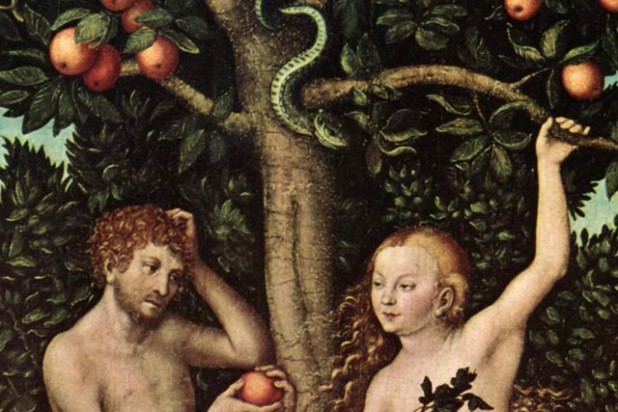
Today we will begin a series of articles that will focus on the women of the Bible. I must confess that for many years I read the Bible without noticing many of these names and their significance to God’s story, but they are significant to God’s story! Knowing the stories of these women is vitally important to understanding the nature of God. Based on a show-of-hands poll at a recent Bible conference I attended, many (including some in ministry) don’t know these stories even though the Spirit placed them in the pages of the Bible. I hope in some small way these articles will begin to change that. The first woman we will look at is not a stranger to most. In fact she’s the first woman of all: Eve.

Eve has received a lot of blame, scorn, and shame throughout the centuries even though she did what you and I do virtually every day – Eve disobeyed God. For some reason scholars and believers have tried to make Eve somehow fundamentally less than Adam, though that was certainly not how God viewed things. Eve was created equal to Adam. She is just as important to God’s story as he. Consider the following verses:

So God created mankind in his own image, in the image of God he created them; male and female he created them.

Genesis 1:27 NIV

Notice that both Adam and Eve are created fully in the image of God. Notice also that they are one: mankind. Nowhere in the story is it even hinted that Eve is somehow less than Adam. Our roles of gender inequality have been heavily influenced by Plato and Aristotle who believed that women were sub-human, less human than men (see Politics 1.1260a). For years we’ve read this worldview onto the story of Eve, as well as other women in Scripture.

The Lord God said, “It is not good for the man to be alone. I will make a helper suitable for him.”

Genesis 2:18 NIV

Time for a Hebrew lesson. The Hebrew phrase translated here as “helper suitable” and in other translations “help meet” is ezer kenegdo. Many look at this phrase from an English standpoint and say this means Eve was less than Adam because she was his helper. The problem with that is that God himself is referred to as our ezer (helper) in a number of places in Scripture (see Ps. 33:20 for example). Does that mean that God is somehow less than us because he helps us? Quite the contrary! He is more powerful than us which means he can help us! God himself is the only other ezer in all of Scripture: God & Eve! The word kenegdo regulates ezer by indicating that this is a helper in likeness, someone who is like the other that can help. According to Dr. Kindy DeLong, without kenegdo a Hebrew reader would have to assume that Eve was more powerful than Adam, but kenegdo shows equality.

Nothing in Genesis 1 or 2 indicates that Eve is somehow inferior to Adam. In fact, it proves quite the opposite. Both Adam and Eve are fully created in the image of God. Eve is a “helper” (ezer) for Adam just as God is a “helper” (ezer) for the psalmist. Instead of God being superior to the psalmist, Eve here is portrayed as equal (kenegdo) to Adam. Next week we’ll look at Genesis 3, and how the New Testament uses that story.

Question to consider: Who sinned first? Adam or Eve? (hint: re-read Gen. 1-3)

Much of the content of this article was inspired by a lecture i attended given by Dr. Kindy DeLong during Harbor 2019 at Pepperdine University. You can listen to the lecture by clicking here.

What is the Best Way to Read the Bible?

Last week we looked at examples from the New Testament of people coming together in community to study the Scriptures. We also looked at the first few centuries after the New Testament to see the council at Nicea surrounding the deity of Christ. Christians came together around the Scriptures in order to clarify beliefs and put an end to false teaching. This council resulted in what we commonly call The Nicene Creed.

This community study of the Scriptures happened on many other occasions as well. As the years passed, again the Church saw need of solidifying doctrine amongst all believers. The decision was made to collect the writings held highly by the community and combine them into an authoritative collection. There was some debate concerning some of the writings we have today in our New Testament, and some differences still exist today (does your Bible contain the Apocrypha?) But when the Church came together in community, the most trusted writings were compiled to solidify the documents of our faith – the New Testament.

We are so used to having our sacred writings in one book. Can you imagine going through life and having to search from city to city to find a copy of John’s Gospel? The fact that you own a Bible, or have access to a Bible online, or in app form is because 1600 years ago the Church, the Body of Christ, came together in community in order to compile (not create) the writings we know and love.

Today, we must take the same approach toward interpreting Scripture. Renowned theologian, seminary professor, and author Scot McKnight has a suggestion for how we are to read and interpret Scripture today in his book, The Blue Parakeet. In this quote, he speaks of the “Great Tradition,” that is the understanding of the historical Christian community.

“I suggest we learn to read the Bible with the Great Tradition. We dare not ignore what God has said to the church through the ages (as the return and retrieval folks often do), nor dare we fossilize past interpretations into traditionalism. Instead, we need to go back to the Bible so we can move forward through the church and speak God’s Word in our days in our ways. We need to go back without getting stuck (the return problem), and we need to move forward without fossilizing our ideas (traditionalism). We want to walk between these two approaches. It’s not easy, but I contend that the best of the evangelical approaches to the Bible and the best way of living the Bible today is to walk between these approaches.”

Scot McKnight, The Blue Parakeet

The history of the church shows that Scripture has been best interpreted in community. When believers come together and wrestle with the Scriptures to find truth, error is avoided, God is honored, and Scripture is upheld and interpreted in a relevant way. As history and the New Testament has shown us, it is the best way.

We Must Take This More Seriously!

I just sat on my couch in Snyder, TX, USA and watched a live (and powerful) sermon streamed over YouTube from Australia. I got to watch and hear the same message preached that my brothers and sisters in Christ are hearing on the other side of the world at the same time they were hearing it. What a time we live in that the Word of God can be transmitted in such a way.

And yet it worries me that we don’t take the Word of God as seriously as we should. We have more opportunity to interact with the Word than any other time in human history. Our access to Scripture is unprecedented, the resources we have to study Scripture and access to quality teaching us seemingly unending. And I think therein lies the problem.

Can you imagine living in a world where every sermon you ever heard was in a language you didn’t understand? And there was no copy of the Bible in your own language? I’m reading a biography on William Tyndale and it’s reminding me of the immense blessing God has given us through having the Bible in our own native language. Tyndale died because he dared to translate the Bible into English, and yet we often find it a bother to carry a Bible around. It’s “inconvenient.”

Can you imagine for the first time in your life hearing these words in your own language for the first time:

“For God so loved the world that he hath given his only son that none that believe in him should perish, but should have everlasting life.” (Tyndale New Testament)

Friends, don’t ever let interacting with the Word of God become routine. Don’t ever let it become so “common” that we don’t take it seriously. About 10 hours from now I’ll gather with brothers and sisters and we’ll open God’s Word once again. I pray you do the same, wherever you are, whatever is going on in your life. I pray you stop and open God’s Word again with the same excitement and passion as if you were hearing it for the very first time. Because for some of you reading this, the Word just might come alive as though it were the very first time.

May God bless you as you gather with the saints and as you dwell in His Word.

2 Rules for Reading Scripture

Last week we looked at the human component in Scripture. All Scripture is from God, but it comes through the mind and hand of humans, sometimes humans writing in community as we noted last week in many of Paul’s writings. This makes the Bible more special in my eyes, that God was willing to partner with humans in getting his word to the world, just as he partners with us today in doing the same thing (See Matthew 28:19). Today we’ll unpack the last part of Bobby Valentine’s quote: “God’s word addressed them in that situation and may not be God’s directive for all time and all places.”

There are two rules for reading Scripture: Context, and Context. Because of the historical nature of revelation we must pay close attention to the historical occasion of the text.  Why was it said or written in the first place? For instance, Ezekiel records many times of coming calamities upon Israel and Jerusalem “from the north.” This does not mean that Americans should be arming our border with Canada and preparing for war. This is a ridiculous example, I admit, but there are some who take equally specific texts meant for a specific people group in a specific time and place and try to apply it to everyone today. We must honor the context of the statements in order to accurately derive their meaning.

Let’s take a look for a moment and look at another example.

I can do all things through Christ who strengthens me.

Philippians 4:13 NKJV

I’ve seen this verse applied to people trying to make a difficult decision, athletes wanting to win a game, couch potatoes that want to work up to running a marathon, churches hoping to begin a new ministry, people hoping to buy a new car or find a new house, and the list goes on and on. This verse is poorly translated in the KJV/NKJV (the word “Christ” doesn’t even appear in the Greek text), and its meaning is poorly applied to our lives because we don’t understand the context of Paul’s statement.

Paul has been arrested for preaching about Christ, but he doesn’t view this as a bad thing. In fact, Paul believes this is good because believers now see their faith in Christ is worth even going to prison over, and therefore they are spreading the Gospel message more intensely (Phil. 1:12-18). Fast forward a few chapters. Paul exhorts the church to rejoice always, no matter your circumstances…even if you are in chains for the Gospel (4:4). They should focus on Godly ways rather than worrying about the things of this world (4:5-9). Paul acknowledges that for a while the church was unable to support him, or provide for his needs (after all, he is in prison so he doesn’t have much – 4:10) Then Paul writes:

I am not saying this because I am in need, for I have learned to be content whatever the circumstances. I know what it is to be in need, and I know what it is to have plenty. I have learned the secret of being content in any and every situation, whether well fed or hungry, whether living in plenty or in want. I can do all this through him who gives me strength.

Philippians 4:11-13 NIV

Paul is saying he doesn’t need money or possessions in order to preach the Gospel. God gives him strength, and that is enough. Want to apply this to your life? You should go preach the Gospel and God will give you the ability in whatever situation you find yourself to do just that. And no, that doesn’t include winning your softball game.

How To Know You’re Interpreting The Bible Correctly.

For the last five weeks we’ve been discussing reading the Bible as story. We’ve discussed Scot McKnight’s description of Scripture where he suggests that there are three “chapters,” or clearly defined sections to the Bible’s overarching story: theocracy (Gen. 1-1 Sam. 8), monarchy (1 Sam. 8 – Mal. 4), and Christocracy (Matthew 1-Rev. 20). It’s important to realize that God’s ultimate goal is to return us back to a theocracy through the redemptive work of Christ, and the final judgement of all people. Seriously, go read the last two chapters of Revelation and you’ll see an image of how God intended our existence to be in the beginning in the Garden.

Today we talk about the concept of Biblical interpretation. In my church heritage there has been a very big emphasis placed on the “plain reading of the Bible.” In other words, “…we don’t interpret the Bible, we simply do what it plainly says.” Lovely idea, but terribly inaccurate. Whether you like it or not, and whether you realize it or not, the Bible is interpreted by everyone.

Don’t believe me? When was the last time your church put an adulterer to death? (Lev. 20:10) Is your clothing made out of a blend of different materials? (Lev. 19:19) Did you greet everyone at worship with a holy kiss? (commanded 4 times in the NT, Rom. 16:16, 1 Cor. 16:20, 2 Cor. 13:12, 1 Thess. 5:26) Did all the men in your assembly lift their hands during every prayer? (1 Tim. 2:8)

If you didn’t do these things, even though a “plain reading” of Scripture clearly shows you should, then you are interpreting Scripture. And you should interpret Scripture! The only question is, “Am I interpreting Scripture properly?”

Bobby Valentine gives us the following suggestions for doing just that:

“Christian hermeneutics will always begin as a response to the God of all grace who has done great things. Christian interpretation will be rooted in the soul that is seeking to reflect God’s glorious image back into the created world around us. Christian biblical interpretation will begin in prayer and will be understood as ‘an act of worship.’ Thus, interpretation that does not begin in prayer and worship and result in the Spirit flowing through us to a vandalized world means we have a right to question if it is a valid hermeneutic or Christian interpretation. Prayer, Worship and reflecting God’s image: these are the beginning points and the ends/goals of interpretation.”

Bobby Valentine

Again the question isn’t if we interpret the Bible. The question is how we interpret. McKnight put sit this way:

“God speaks to us for a reason – I call this ‘missional’ listening. In brief, God tells his story so we can enter into a relationship with him, listen to him, and live out his Word in our day and in our way.”

Scot McKnight, The Blue Parakeet, 2nd Ed., pg. 113

If our interpretation of Scripture doesn’t affect our daily lives, it’s worthless. If our interpretation brings us into a place where we better reflect the image of Christ (Rom. 8:29 – remember we’re living in a Christocracy), then we can be confident in our approach to the Scriptures.

So, how is your interpretation of Scripture reflecting the image of Christ to others in your life?

You’re Probably Reading the Bible the Wrong Way (Part 5)

For the last four weeks we’ve been discussing reading the Bible as story. 70% of the Bible’s text is narrative (story) and the other 30% is communication between the characters in that story. We looked at Scot McKnight’s description of Scripture where he suggests that there are three “chapters,” or clearly defined sections to the Bible’s overarching story. Week have explored theocracy, which is found from Genesis 1 through 1 Samuel 8, and last week we looked at the monarchy, Israel’s rule by earthly kings. This section begins in 1 Samuel 8 and continues through the end of the Old Testament. Simply put, rejecting God never turns out well.

We ended with the question: How have I rejected God as my King, and how has it affected my life? Keep that question in mind as we discuss the final of McKnight’s “chapters”, Christocracy. If you try to look that word up in a standard dictionary you probably won’t have much luck. By Christocracy we mean a body of believers governed directly by the living, resurrected Jesus, the Christ! In the New Testament Jesus said, “…I will build my church…” (Mt. 16:18). The word we have translated as “church” in your Bible is the Greek word ekklesia, and it has absolutely nothing to do with a building. The word simply means assembly, or gathering. What Jesus intends to do is gather and create a people group who are called out of the world’s systems and governments to follow and obey a new King above all, the risen Jesus.

Following King Jesus is a difficult task that must be considered carefully. Consider the following:

Large crowds were traveling with Jesus, and turning to them he said:  “If anyone comes to me and does not hate father and mother, wife and children, brothers and sisters—yes, even their own life—such a person cannot be my disciple. And whoever does not carry their cross and follow me cannot be my disciple.
“Suppose one of you wants to build a tower. Won’t you first sit down and estimate the cost to see if you have enough money to complete it? For if you lay the foundation and are not able to finish it, everyone who sees it will ridicule you, saying, ‘This person began to build and wasn’t able to finish.’
“Or suppose a king is about to go to war against another king. Won’t he first sit down and consider whether he is able with ten thousand men to oppose the one coming against him with twenty thousand? If he is not able, he will send a delegation while the other is still a long way off and will ask for terms of peace.
In the same way, those of you who do not give up everything you have cannot be my disciples.

Luke 14:25-33 NIV (emphasis added)

Following King Jesus as part of his ekklesia means allegiance to him above all else. This isn’t a half hearted, fill the pew an hour a week type of relationship! Nothing else in this life matters apart from following his will. He is our King, and we die to ourselves, our desires, our choices when we decide to follow him. It’s a radical kingdom!

We see from theocracy that the people rejected God as their king. We see from monarchy that the people rejected God even with an earthly king.  And sadly in our Christocracy that we call the church, many will still reject Christ as their king. But Christocracy is designed to return us to a Theocracy once again at the end of time (read Revelation 21 & 22 for what this looks like).

But now back to our original question: How have I rejected God as my King, and how has it affected my life? If Jesus isn’t Lord of your life you are rejecting him. You are rejecting God’s will on your life. And the scary thing is he will let you do this. But as Scripture makes clear, no good comes from rejecting King Jesus!

You’re Probably Reading the Bible the Wrong Way (Part 4)

For the last three weeks we’ve been discussing reading the Bible as story. 70% of the Bible’s text is narrative (story) and the other 30% is communication between the characters in that story. We looked at Scot McKnight’s description of Scripture:

“There is not just one and only one story in the Bible. But there are two nonnegotiables (sic) in the Bible’s Story. First, there is a general plot from the creation of the heavens and the earth in Genesis 1-2 to the establishment of the new heaven and the new earth in Revelation 20-22. Second, there are redemptive benefits for those who participate in that ‘general plot’ by declaring allegiance to the God of that plot.”

The Blue Parakeet, 2nd Ed., pg 68

McKnight goes further to suggest that there are three “chapters,” or clearly defined sections to the Bible’s overarching story. Last week we explored theocracy, which is found from Genesis 1 through 1 Samuel 8. Today we look at the next section of the Bible, monarchy.

Most people are familiar with the term monarchy. It’s a form of government where one person, usually a king or queen, rules over a people.  Here’s how the text sets this up in 1 Samuel 8:

But when they said, “Give us a king to lead us,” this displeased Samuel; so he prayed to the Lord. And the Lord told him: “Listen to all that the people are saying to you; it is not you they have rejected, but they have rejected me as their king. As they have done from the day I brought them up out of Egypt until this day, forsaking me and serving other gods, so they are doing to you. Now listen to them; but warn them solemnly and let them know what the king who will reign over them will claim as his rights.”

1 Samuel 8:6-9 NIV

God gave the people what they wanted, even though it meant rejecting him. There were good times under some of the kings, but when you have a human running things there will always be failures. Israel’s history under the kings is full of failures. And a parallel can be extended to our lives as well. When we reject God’s lead in our lives we too will fail. Perhaps not every moment of every day will be a failure, but we will suffer the effects of rejecting God.

Just browse through your Old Testament from 1 Samuel 8 to the end of Malachi. What do you see? What do the title headings (added by editors of your translation as aides for understanding) show you about the narrative of the story? I just did a quick flip through and came across the following on each page I turned to: Judgement on Jerusalem and Judah, The Covenant is Broken, The Fall of Jerusalem, Idolatry in the Temple, Judgement on the Idolaters, Israel to be Destroyed. These are the kinds of things the rejection of God brings upon people. But this is not the end of the story.

You will also find headings such as A Promised Messiah from Bethlehem, Israel will Rise, Restoration of Israel’s Remnant. Even through the people’s rejection of God as their King, he was preparing to send another King that would undo that rejection. That section begins in Matthew 1. But for now, answer this question:

How have I rejected God as my King, and how has it affected my life?

You’re Probably Reading the Bible the Wrong Way (Part 3)

For the last two weeks we’ve been discussing reading the Bible as story. 70% of the Bible’s text is narrative (story) and the other 30% is communication between the characters in that story. We looked at Scot McKnight’s description of Scripture:

“There is not just one and only one story in the Bible. But there are two nonnegotiables (sic) in the Bible’s Story. First, there is a general plot from the creation of the heavens and the earth in Genesis 1-2 to the establishment of the new heaven and the new earth in Revelation 20-22. Second, there are redemptive benefits for those who participate in that ‘general plot’ by declaring allegiance to the God of that plot.”

McKnight goes further to suggest that there are three “chapters,” or clearly defined sections to the Bible’s overarching story. We’ll look at each of these “chapters” individually over the next few articles. The first of these is theocracy.

According to the dictionary, theocracy is a political system governed by a deity (or by officials thought to be divinely guided). In other words, when the Bible begins we see the center of everything is God Yahweh. From Genesis 1 until 1 Samuel 8, it is God and only God who has the authority to rule. God makes everything, therefore everything is under his authority, and from the beginning he yields some of that authority to other beings, including humans (we’ll talk more about the other beings later). We see this clearly in Genesis 1:28-31. God expected humans to have authority over the created earth while remaining subject to him.

During this time there is no earthly king, no earthly political leader. God is the center of everything. Yet we see a common problem throughout this time as well: humans constantly go against the will of God. From Adam and Eve in the garden story to Noah, to Abraham, to Moses, all of these episodes show that Israel is truly an appropriate name for God’s people (Israel means “struggles with God”)

Theocracy was the ideal in the Garden. God giving a direct set of limited rules to the people (in this case Adam and Eve) by which to live, but ultimately God himself led them. The problem? The people rebelled. Adam and Eve are cast out of the Garden and so there’s distance between God and man, but God himself is still the direct leader of the people. The problem? The people rebelled (just read Genesis 6!) God ultimately deals with unbridled violence through rescuing Noah and his family through the flood. The problem? The people rebelled again (Gen. 11). God now begins to speak to some individuals directly, and relays his message through some of these  human beings. These people are variously referred to as prophets, or judges, and some have no special title at all. All the way through this section of Scripture, God is the one who directly deals with the people, and the people continually rebel. Story after story in this section fits into this narrative style.

So where does the story of the Bible go after theocracy? We’ll look at that next time, but if you want to get a head start in thinking about the next section of Scripture, look at 1 Samuel 8. In the meantime, ask yourself this question:

Have I fully submitted my life to God and his will, or do I “Israel,” that is struggle and rebel against God’s will for me?

You’re Probably Reading the Bible the Wrong Way (Part 2)

In my last article I mentioned that followers of Christ need the entirety of Scripture (both Old and New Testaments) in order to really understand God’s Word revealed to humans. Many will try to say we only need the New Testament, but this is not what the writers of the New Testament believed. They knew the entire Word of God was important (see my last article for further explanation.)

70% of the Bible is story. It’s narrative description of what has happened to humans seeking to honor God (or not) with their lives, and God’s interactions with those people. The other 30% of the Bible is messages back and forth between members of the story…letters written between the characters of the story. We need all of this to see the story of the Bible, as well as to properly understand Scripture in its own context.

Scot McKnight puts it this way in his book, The Blue Parakeet:

“There is not just one and only one story in the Bible. But there are two nonnegotiables (sic) in the Bible’s Story. First, there is a general plot from the creation of the heavens and the earth in Genesis 1-2 to the establishment of the new heaven and the new earth in Revelation 20-22. Second, there are redemptive benefits for those who participate in that ‘general plot’ by declaring allegiance to the God of that plot.”

The Garden was perfect. God’s creation was good and not marred by sin. The Garden represents the ideal relationship between God and his people. Here they are physically present with one another (Gen. 3:8). When will this type of relationship happen again?

Then the angel showed me the river of the water of life, as clear as crystal, flowing from the throne of God and of the Lamb down the middle of the great street of the city. On each side of the river stood the tree of life, bearing twelve crops of fruit, yielding its fruit every month. And the leaves of the tree are for the healing of the nations. No longer will there be any curse. The throne of God and of the Lamb will be in the city, and his servants will serve him. They will see his face, and his name will be on their foreheads. There will be no more night. They will not need the light of a lamp or the light of the sun, for the Lord God will give them light. And they will reign for ever and ever.

Revelation 22:1-5 NIV

Notice that we are once again in a garden setting in the physical presence of God himself and his radiance is all the light we will need.

God is about the work of restoring all things. He is working to make all things new again. Perhaps this is what Paul means when he tells us we are a “new creation” in Christ (2 Cor. 5:17, Gal. 6:15).

Next week we’ll look at the three main sections of the overarching story of the Bible, but for today I would encourage you to seek the answer to this question:

Does who I used to be still haunt me, or am I truly living like a new creation in Christ?

You’re Probably Reading the Bible the Wrong Way (Part 1)

You’re probably reading the Bible the wrong way. I did this for years and missed a lot of what God was saying through various parts of the Bible. Parts of it really resonated with me, and parts of it, frankly, I could do without. Then I learned how to look at the Bible as a whole, not little parts put together that were unrelated, but as a complete work. When I did this things began to make far more sense. If this sounds familiar, you may not understand what the Bible is intended to do.

All Scripture is God-breathed and is useful for teaching, rebuking, correcting and training in righteousness, so that the servant of God may be thoroughly equipped for every good work. – 2 Timothy 3:16-17

All Scripture. Every bit of it. You realize Paul was writing the New Testament as he said this, right? When Jude said that the faith has been delivered “once for all” that the New Testament wasn’t completed? Paul reminds Timothy that from “infancy you have known the Holy Scriptures, which are able to make you wise for salvation through faith in Christ Jesus.” You realize he’s talking about the Old Testament, right?

So what are we to make of the Bible as a whole? Famed pastor Andy Stanley has recently said Christians need to “unhitch” themselves from the Old Testament, and that the Ten Commandments don’t apply to Christians. I’ve known many Christians over the years who would say something similar, that the Old Testament has no bearing on us today, citing arguments based on a misreading of Colossians 2:14 and arguments based on the names Old Testament and New Testament, terms which Scripture itself never applies to itself.

I’ve always liked the description that the Bible Project uses when describing the Bible: “Our mission is to show how the Bible is a unified story that leads to Jesus.” Scot McKnight summarizes it this way, “…there is an overarching plot to the Bible–God’s creating the heavens and earth to completing his creation work in the new heavens and new earth.

Over the next few weeks we are going to discuss how we should approach reading and understanding the Bible. It’s a collection of 66 writings – letters, sermons, history, songs, prayers, complaints, warnings and prophecies –  written by over 40 people over a span of 1600 years in three languages on three continents and has a unifying theme that can only be explained by a God behind its writing. And we completely miss it when we try to pick apart the Bible into little nuggets of information rather than viewing Scripture in context of the entirety of God’s Word.

As we approach this study, let us look at the Word with fresh eyes to discover the ancient truths perhaps for the first time, and let us remember that God’s Word never returns empty (Isa. 55:11). When we study the Word, we are blessed in doing so.