Daily Psalms – Psalm 105

Daily Psalm Reading – Psalm 101-105

Today we focus in on Psalm 105, a poetic history of the people of Israel. If you want a summary of the Hebrew Scriptures in a concise package, you’ve come to the right place. The psalmist begins by reminding us of our part in the story of God:

Give praise to the LORD, proclaim his name;
    make known among the nations what he has done.
Sing to him, sing praise to him;
    tell of all his wonderful acts.

Psalm 105:1-2 NIV

How often are you stopping to “tell of all his wonderful acts?” Or better yet, how often are you stopping to recognize all his wonderful acts in your life? The psalmist recounts Israel’s history, which is also your history and my history because we are children of Abraham (Gal. 3:7). We need to know this story! It’s your story!

Your personal story is also important. Every generation of believers learns the historical story of Yahweh’s people. We are also called to be witnesses of what he has done in our lives. We need to tell others the story of Jesus and how he has changed our lives! Lost souls need to hear that God remembers the promises he has made forever, and those promises extend to us as well! (v. 8-10)

Telling our story also keeps us focused on what matters. History is selective. We tend to tell about the winning goal we scored rather than what we ate for lunch in the 4th grade. We tend to leave out the unimportant details in favor of the ones we view as more important.

So how important is God to you?

How important is the saving power of Jesus in your life?

If it is important to you, are you telling that story?

If not, why not?

These questions get us thinking about what is really important in our past, and those realizations should influence us to focus on what is important in the present and the future.

Glory in his holy name;
    let the hearts of those who seek the LORD rejoice.
Look to the LORD and his strength;
    seek his face always.

Psalm 105:3-4 NIV

Our history is his story. Let us all focus on what truly matters, and tell that story in our lives. Blessings.

Daily Psalms – Psalm 73

Daily Psalm Reading – Psalm 71-75

Our reading today concludes Book 2 of Psalms and enters Book 3, of which Psalm 73 is the beginning. Here we focus on the psalms “of Asaph.” Psalm 73 is a wonderful reminder for us today who struggle with the same fault that the psalmist admits: envy over the unrighteous.

But as for me, my feet had almost slipped;
I had nearly lost my foothold.
For i envied the arrogant
when I saw the prosperity of the wicked.

Psalm 73:2-3 NIV

This is a big theme throughout the Proverbs especially, but also in Psalms. “Ill-gotten gain” is condemned repeatedly, and yet we still admire seeing wealth on display, no matter how it’s gotten, for some reason. We are drawn to the illusion of wealth and luxury, that it will somehow fix our problems. In reality, it amplifies our problems.

But back to the main point, we think about money so much, and yet we don’t think about money as much as we should. Dr. Jenn Hale Christy had a very thought provoking podcast on this topic recently where she asked us to consider what we’re actually doing with our money. We blindly throw our money into investment accounts, but do we actually know what we are investing in? Is our retirement savings coming to us through “ill-gotten gains?”

The psalmist talks about all the present-moment advantages that these wicked people seem to have: no struggles, healthy, easy life. But when we renew our focus on God we begin to see things clearly. The illusion of the wicked lifestyle begins to fall.

When I tried to understand all this,
it troubled me deeply
till I entered the sanctuary of God;
then I understood their final destiny.

Psalm 73:16-17 NIV

This is one of the many reasons why worship is so important. When we worship God it recalibrates our hearts to follow him. In his excellent book, You Are What You Love: The Spiritual Power of Habit, James K. A. Smith reminds us that the entire world is a liturgy; everything we do is worship of something, and forms us into the image of that something. Gathering with believers in worship of our God refocuses and reshapes us into who he wants us to be. He is the one who loves. He is the one who guides. He is the one who saves.

Yet I am always with you;
you hold me by my right hand.
You guide me with your counsel,
and afterward you will take me into glory.
Whom have I in heaven but you?
And earth has nothing I desire besides you.
My flesh and my heart may fail,
but God is the strength of my heart
and my portion forever.

Psalm 73:23-26 NIV

Eve: Equality with Adam – Part 2

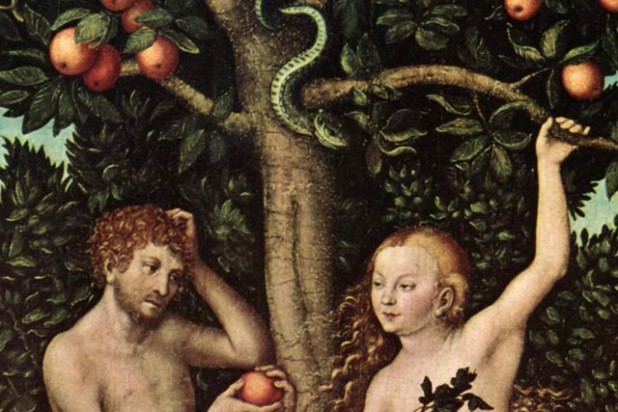
We continue our look at the women of the Bible by looking again at Eve’s story. Last week we noted that nothing in Genesis 1 or 2 indicates that Eve is somehow inferior to Adam. In fact, it proves quite the opposite. Both Adam and Eve are fully created in the image of God. We ended with a question last week: Who sinned first? Adam or Eve? Let’s look at a few verses to find the answer.

And Adam was not the one deceived; it was the woman who was deceived and became a sinner.

1 Timothy 2:14 NIV

Therefore, just as sin entered the world through one man, and death through sin, and in this way death came to all people, because all sinned…

Romans 5:12 NIV

For since death came through a man, the resurrection of the dead comes also through a man. For as in Adam all die, so in Christ all will be made alive.

1 Corinthians 15:21-22 NIV

Confused yet? Upon first glance it would appear Paul is too, but not quite. Let’s look at one more verse.

The Lord God took the man and put him in the Garden of Eden to work it and take care of it.

Genesis 2:15 NIV

The word for “take care of it” would be the Hebrew word shamar which means “to keep, guard, keep watch and ward, protect, save life.” Adam was charged as the keeper and protector of the Garden. Yet in Genesis chapter 3 as he is with Eve (3:6), he fails to do this. (by the way, all of the serpent’s statements are made using the plural “you,” not singular).

Eve was the first to be deceived (per Paul), but Adam failed to shamar his wife and the Garden from the deception of the serpent. Notice also that both the humans and the serpent are punished; first the serpent, then Eve, then Adam. All three sinned.

So who sinned first? Could it have been Adam for not kicking the serpent out of the Garden? Perhaps. The serpent for deceiving Eve (3:14)? It would seem likely this was the first, although the serpent isn’t human (that’s a theological discussion for another time). Was it Eve who ate the fruit?

I think the way the story is told is intentional to show how intertwined we humans are. Adam was supposed to obey God through his shamar of the Garden and Eve. He failed at this at the same time Eve failed at obeying God’s command through the deception of the serpent. Genesis 3 is not an elevation of man over woman. It shows us that sin is a problem that affects all creation – humans, animals, and even the garden which is now devoid of its human caretakers. Sin affects everything. This is not a problem that we can blame on Eve or Adam. I think Paul understood this as well.

There is no difference…for all have sinned and fall short of the glory of God, and all are justified freely by his grace through the redemption that came by Christ Jesus.

Romans 3:22-24 NIV

Question: So does God want Adam to now rule over Eve because they have sinned?

What is the Best Way to Read the Bible?

Last week we looked at examples from the New Testament of people coming together in community to study the Scriptures. We also looked at the first few centuries after the New Testament to see the council at Nicea surrounding the deity of Christ. Christians came together around the Scriptures in order to clarify beliefs and put an end to false teaching. This council resulted in what we commonly call The Nicene Creed.

This community study of the Scriptures happened on many other occasions as well. As the years passed, again the Church saw need of solidifying doctrine amongst all believers. The decision was made to collect the writings held highly by the community and combine them into an authoritative collection. There was some debate concerning some of the writings we have today in our New Testament, and some differences still exist today (does your Bible contain the Apocrypha?) But when the Church came together in community, the most trusted writings were compiled to solidify the documents of our faith – the New Testament.

We are so used to having our sacred writings in one book. Can you imagine going through life and having to search from city to city to find a copy of John’s Gospel? The fact that you own a Bible, or have access to a Bible online, or in app form is because 1600 years ago the Church, the Body of Christ, came together in community in order to compile (not create) the writings we know and love.

Today, we must take the same approach toward interpreting Scripture. Renowned theologian, seminary professor, and author Scot McKnight has a suggestion for how we are to read and interpret Scripture today in his book, The Blue Parakeet. In this quote, he speaks of the “Great Tradition,” that is the understanding of the historical Christian community.

“I suggest we learn to read the Bible with the Great Tradition. We dare not ignore what God has said to the church through the ages (as the return and retrieval folks often do), nor dare we fossilize past interpretations into traditionalism. Instead, we need to go back to the Bible so we can move forward through the church and speak God’s Word in our days in our ways. We need to go back without getting stuck (the return problem), and we need to move forward without fossilizing our ideas (traditionalism). We want to walk between these two approaches. It’s not easy, but I contend that the best of the evangelical approaches to the Bible and the best way of living the Bible today is to walk between these approaches.”

Scot McKnight, The Blue Parakeet

The history of the church shows that Scripture has been best interpreted in community. When believers come together and wrestle with the Scriptures to find truth, error is avoided, God is honored, and Scripture is upheld and interpreted in a relevant way. As history and the New Testament has shown us, it is the best way.

We Must Take This More Seriously!

I just sat on my couch in Snyder, TX, USA and watched a live (and powerful) sermon streamed over YouTube from Australia. I got to watch and hear the same message preached that my brothers and sisters in Christ are hearing on the other side of the world at the same time they were hearing it. What a time we live in that the Word of God can be transmitted in such a way.

And yet it worries me that we don’t take the Word of God as seriously as we should. We have more opportunity to interact with the Word than any other time in human history. Our access to Scripture is unprecedented, the resources we have to study Scripture and access to quality teaching us seemingly unending. And I think therein lies the problem.

Can you imagine living in a world where every sermon you ever heard was in a language you didn’t understand? And there was no copy of the Bible in your own language? I’m reading a biography on William Tyndale and it’s reminding me of the immense blessing God has given us through having the Bible in our own native language. Tyndale died because he dared to translate the Bible into English, and yet we often find it a bother to carry a Bible around. It’s “inconvenient.”

Can you imagine for the first time in your life hearing these words in your own language for the first time:

“For God so loved the world that he hath given his only son that none that believe in him should perish, but should have everlasting life.” (Tyndale New Testament)

Friends, don’t ever let interacting with the Word of God become routine. Don’t ever let it become so “common” that we don’t take it seriously. About 10 hours from now I’ll gather with brothers and sisters and we’ll open God’s Word once again. I pray you do the same, wherever you are, whatever is going on in your life. I pray you stop and open God’s Word again with the same excitement and passion as if you were hearing it for the very first time. Because for some of you reading this, the Word just might come alive as though it were the very first time.

May God bless you as you gather with the saints and as you dwell in His Word.

You’re Probably Reading the Bible the Wrong Way (Part 5)

For the last four weeks we’ve been discussing reading the Bible as story. 70% of the Bible’s text is narrative (story) and the other 30% is communication between the characters in that story. We looked at Scot McKnight’s description of Scripture where he suggests that there are three “chapters,” or clearly defined sections to the Bible’s overarching story. Week have explored theocracy, which is found from Genesis 1 through 1 Samuel 8, and last week we looked at the monarchy, Israel’s rule by earthly kings. This section begins in 1 Samuel 8 and continues through the end of the Old Testament. Simply put, rejecting God never turns out well.

We ended with the question: How have I rejected God as my King, and how has it affected my life? Keep that question in mind as we discuss the final of McKnight’s “chapters”, Christocracy. If you try to look that word up in a standard dictionary you probably won’t have much luck. By Christocracy we mean a body of believers governed directly by the living, resurrected Jesus, the Christ! In the New Testament Jesus said, “…I will build my church…” (Mt. 16:18). The word we have translated as “church” in your Bible is the Greek word ekklesia, and it has absolutely nothing to do with a building. The word simply means assembly, or gathering. What Jesus intends to do is gather and create a people group who are called out of the world’s systems and governments to follow and obey a new King above all, the risen Jesus.

Following King Jesus is a difficult task that must be considered carefully. Consider the following:

Large crowds were traveling with Jesus, and turning to them he said:  “If anyone comes to me and does not hate father and mother, wife and children, brothers and sisters—yes, even their own life—such a person cannot be my disciple. And whoever does not carry their cross and follow me cannot be my disciple.
“Suppose one of you wants to build a tower. Won’t you first sit down and estimate the cost to see if you have enough money to complete it? For if you lay the foundation and are not able to finish it, everyone who sees it will ridicule you, saying, ‘This person began to build and wasn’t able to finish.’
“Or suppose a king is about to go to war against another king. Won’t he first sit down and consider whether he is able with ten thousand men to oppose the one coming against him with twenty thousand? If he is not able, he will send a delegation while the other is still a long way off and will ask for terms of peace.
In the same way, those of you who do not give up everything you have cannot be my disciples.

Luke 14:25-33 NIV (emphasis added)

Following King Jesus as part of his ekklesia means allegiance to him above all else. This isn’t a half hearted, fill the pew an hour a week type of relationship! Nothing else in this life matters apart from following his will. He is our King, and we die to ourselves, our desires, our choices when we decide to follow him. It’s a radical kingdom!

We see from theocracy that the people rejected God as their king. We see from monarchy that the people rejected God even with an earthly king.  And sadly in our Christocracy that we call the church, many will still reject Christ as their king. But Christocracy is designed to return us to a Theocracy once again at the end of time (read Revelation 21 & 22 for what this looks like).

But now back to our original question: How have I rejected God as my King, and how has it affected my life? If Jesus isn’t Lord of your life you are rejecting him. You are rejecting God’s will on your life. And the scary thing is he will let you do this. But as Scripture makes clear, no good comes from rejecting King Jesus!

You’re Probably Reading the Bible the Wrong Way (Part 2)

In my last article I mentioned that followers of Christ need the entirety of Scripture (both Old and New Testaments) in order to really understand God’s Word revealed to humans. Many will try to say we only need the New Testament, but this is not what the writers of the New Testament believed. They knew the entire Word of God was important (see my last article for further explanation.)

70% of the Bible is story. It’s narrative description of what has happened to humans seeking to honor God (or not) with their lives, and God’s interactions with those people. The other 30% of the Bible is messages back and forth between members of the story…letters written between the characters of the story. We need all of this to see the story of the Bible, as well as to properly understand Scripture in its own context.

Scot McKnight puts it this way in his book, The Blue Parakeet:

“There is not just one and only one story in the Bible. But there are two nonnegotiables (sic) in the Bible’s Story. First, there is a general plot from the creation of the heavens and the earth in Genesis 1-2 to the establishment of the new heaven and the new earth in Revelation 20-22. Second, there are redemptive benefits for those who participate in that ‘general plot’ by declaring allegiance to the God of that plot.”

The Garden was perfect. God’s creation was good and not marred by sin. The Garden represents the ideal relationship between God and his people. Here they are physically present with one another (Gen. 3:8). When will this type of relationship happen again?

Then the angel showed me the river of the water of life, as clear as crystal, flowing from the throne of God and of the Lamb down the middle of the great street of the city. On each side of the river stood the tree of life, bearing twelve crops of fruit, yielding its fruit every month. And the leaves of the tree are for the healing of the nations. No longer will there be any curse. The throne of God and of the Lamb will be in the city, and his servants will serve him. They will see his face, and his name will be on their foreheads. There will be no more night. They will not need the light of a lamp or the light of the sun, for the Lord God will give them light. And they will reign for ever and ever.

Revelation 22:1-5 NIV

Notice that we are once again in a garden setting in the physical presence of God himself and his radiance is all the light we will need.

God is about the work of restoring all things. He is working to make all things new again. Perhaps this is what Paul means when he tells us we are a “new creation” in Christ (2 Cor. 5:17, Gal. 6:15).

Next week we’ll look at the three main sections of the overarching story of the Bible, but for today I would encourage you to seek the answer to this question:

Does who I used to be still haunt me, or am I truly living like a new creation in Christ?

Heart Problems

Our Gospel reading for this week is Matthew chapters 5 & 6. This is part of what we commonly refer to as the Sermon on the Mount, one of Jesus’ longest teaching passages in the Gospels. I’ve heard people say that this passage of Scripture is a checklist we need to keep in order to please Jesus, but if you view the Sermon on the Mount as a checklist, you’ve missed the point.

Jesus is addressing a number of topics in this passage: Attitudes (5:1-12), Actions/Witness (v13-16), Righteousness (v.17-20), Conflict (v. 21-26), Marriage, specifically Adultery (v. 27-30) and Divorce (v.31-32), Honesty (v.33-37), Revenge (v.38-48), Giving (6:1-4), Prayer & Forgiveness (v.5-15), Fasting (v.19-24), and Worry/Self Dependence (v.25-34). All that said, Jesus really addresses one topic in this whole passage, and applies it to different areas. What’s the one topic? The heart.

In every instance, Jesus is teaching us how our heart should be focused. We can try to follow checklists all day, but without our heart being right we’ll never be able to accomplish God’s will. Let’s look at one example in particular.

Matthew 5:16 – “…let your light shine before others, that they may see your good deeds and glorify your Father in heaven.”

Matthew 6:1“Be careful not to practice your righteousness in front of others to be seen by them.”

How are we supposed to keep both of these? There’s no way to check these off a list. If people see me I can’t check one, and if they don’t see me I can’t check the other. What’s the difference? The heart. It all boils down to what our heart is searching for – honoring God and glorifying Him, or showing off and honoring ourselves. If the heart is in the right place, we are doing what Jesus commands. It really boils down to this: do we treasure God, or praise from others?

Matthew 6:21- “For where your treasure is, there your heart will be also.”

If our hearts are right our attitudes will be right when we’re mistreated (5:1-12). If our hearts are right we will be salt and light (both elements which change every situation they enter) for God’s glory (v. 13-16). If our hearts are right we will want to be righteous in our actions (v.17-20). If our hearts are right we won’t mistreat our brothers and sisters (v.21-26). If our hearts are right we will honor our spouses by remaining pure and committed to each other (v.27-32). If our hearts are right we will deal in love with honesty and not seek revenge when we are wronged (v.33-48). If our hearts are right we will give generously, not for our own glory, but to honor God (6:1-4). If our hearts are right we will pray heartfelt prayers that lift up others and don’t glorify ourselves…we’ll forgive others as we’ve been forgiven (v.5-15). If our hearts are right we’ll focus on God because of our want of relationship with him, not to impress others (v.19-24). If our hearts are right we’ll rely on Him for our needs without worry (v.25-34).

To quote the first words of Rick Warren’s The Purpose Driven Life: “It’s not about you!” The Pharisees and teachers of the Law in the first century had missed this. They had taken God’s word and twisted its application to be all about themselves and how righteous they were by how well they kept the rules.

Matthew 6:33 – “But seek first his kingdom and his righteousness, and all these things will be given to you as well.”

It’s not about you. It’s about God. Keep your heart focused on honoring Him in everything you do. Only then will we see the Sermon on the Mount carried out in our lives. – Matt

Nobody Else Can Claim This!

We’re doing something different this year with our church, and I’d like for you, my readers to join us. The goal is as a church family we will read through the Gospel of Matthew by Easter, and the other three Gospels by the end of the year. I will be writing at least one article per week that goes along with the reading…not really a complete commentary on the Gospels, but rather a reading guide. We’ll be reading roughly two chapters per week (four short chapters this week). This is an easy to accomplish reading plan for the year, but at the same time we will spend the entire year focused on the life of our Lord and Savior, Jesus Christ. I hope you choose to read with us! Click here to download the Yearly Gospel Reading Plan

This week we’re looking at the first four chapters of Matthew. The Gospel of Matthew was written by a Jew to a Jewish audience, so there are some major Jewish themes, explanations, and topics that Matthew brings up. The major focus of these first few chapters is who Jesus is, and where Jesus came from. The genealogy that many might skim over was very important to Jews, and is full of information that teaches us about Jesus.

Because space is limited I’ll only focus on the women mentioned, which in itself is odd. Women were never included in official Jewish genealogies because during this time they had no legal rights and were considered property rather than people. But notice that God doesn’t see it that way! He includes Tamar the adulteress (Gen. 38), Rahab the prostitute (Joshua 2), Ruth the Moabite (Ruth), and Bathsheba the adulteress (2 Sam 11&12). Here Matthew shows us two things: 1) The barriers the religious elite had put in place are being removed, 2) Somehow God can even use those who have gone through tragic and sinful situations to accomplish His purposes, even bringing His Son into the world through their lineage!

Chapter 2 covers the Christmas story, the birth of Jesus and the fulfilled prophecies that further point to who Jesus was and where he comes from. Because this is January most of us have studied the Christmas story recently, and we’ll not dwell here.

Finally we arrive at chapter 3 where we meet John the Baptist who is preparing the way for the Messiah (another prophecy fulfilled) and we see the baptism of Jesus. (Personally I’ve never understood people wanting to be a follower of Jesus, to be like Jesus, but not wanting to be baptized. Even Jesus said he needed to do this “to fulfill all righteousness.” Shouldn’t we want to follow his example, and command? (Mt. 28:19)) In this passage we see two events we often overlook that would be important to Matthew’s readers: Jesus receiving smicha (pronounced smee-hah), which your Bible likely translates as “authority“, or “one who had authority.” 

When Jesus had finished saying these things, the crowds were amazed at his teaching, because he taught as one who had authority, and not as their teachers of the law. – Matthew 7:28-29

Great teachers became Rabbi’s, meaning they had the “authority” to interpret,  apply, and create new teachings about scripture when they themselves were granted smicha by other Rabbi’s who had smicha. Apparently John the Baptist had smicha (Mt. 21:23-27). The other grantor of smicha? God himself!

“This is my beloved Son, with whom I am well-pleased.” – 3:17 

Matthew’s Jewish readers would realize that Jesus was the only Rabbi in history who received his smicha directly from God himself. Jesus isn’t some ordinary teacher. Jesus is the Messiah, the Son of God!

Our reading this week ends with chapter 4. Jesus faces temptation without sin in the wilderness, begins his ministry, and calls his first disciples. But the chapter ends with a message to Matthew’s Jewish readers, as well as to us today, that Jesus’ message and salvation was for a much broader audience than anyone expected.

“Large crowds followed him from Galilee, the Decapolis, Jerusalem, Judea, and beyond the Jordan.” – Matthew 4:25

Here we have a listing of areas that were the home of the most well educated religious scholars, and the common folk.  Extremely traditional and conservative teachers, and extremely liberal and radical ones. But it also includes gentiles from the Decapolis. Matthew is reminding us that even early in his ministry we can see that Jesus came from God to save everybody!

Be blessed as you read Matthew’s story of Jesus this week! – Matt

Where Do I Start?

From time to time people tell me they want to start reading the Bible, and they almost always share the same question… “Where do I start?”

Last week we talked about how the Bible isn’t just another book. It’s really a collection of writings, and those writings are organized a certain way within the book. Most books are sequential, or chronological in nature. The Bible doesn’t work that way. It’s grouped by type. Let me show you what I mean. We’ll begin with the Old Testament.

The first five books of the Bible make up The Law of Moses (also known as the Pentateuch or the Torah.) These books were compiled and written by Moses and incorporate the earliest history of the Israelites, as well as the books of the law of the covenant between God and his people (such as the 10 commandments.)

The History of Israel is recorded in the next twelve books from Joshua to Esther. Within these writings you can learn about the history of God’s interaction with the Israelites. From entering the promised land, to great battles. Most people know these writings through stories they were taught in Sunday School or Vacation Bible School growing up.

Poetry and Wisdom Literature makes up the next 5 books from Job through Song of Songs. In this section you will find beautiful writings of people who are struggling with God and the pain of this world, songs of praise for God, a graphic description of a man’s love for his wife, and a collection of wise sayings.

The Major Prophets are known as such because their prophecies played a major part in the life of Israel. Many of these writings are quoted by the writers of the New Testament. These books from Isaiah through Daniel foretell of the coming of the Messiah, and include many warnings and depictions of the captivities and destruction that Israel would face in the future because of their disobedience to God.

In a similar way, The Minor Prophets from Hosea through Malachi describe more minor events and prophecies from the history of Israel. These books aren’t any less important, but are more specific in their writings and application. The well known story of Jonah is found here, as well as the rebuilding of Jerusalem after the Babylonian exile.

If you are interested in the history of Israel, studying the long anticipated coming of the Messiah, or want to read some beautiful poetry, you can find what you are looking for in the Old Testament. Click Here to read part two about the New Testament.