
Daily Psalms – Psalm 34

Today we look at Psalm 34, a psalm of thanksgiving that seeks to teach us to “teach you the fear of Yahweh.” (v. 11)

Psalm 34 is an acrostic, meaning each verse begins with a successive letter of the Hebrew alphabet. From that standpoint this is a highly stylized psalm, but it isn’t just for show…there is a clear intent. The psalmist hopes to instill wise living to “Whoever of you loves life and desires to see many good days.” (v. 12)

Spend any time watching TV or browsing social media and you will find what our culture says is important for loving life and having good days. It’s all about the food you eat, the clothes you wear, the places you go, the famous people you interact with, who you vote for, who you hang out with, the car you drive, the house you live in, the movies you see, the games you play…the list is never ending. Approximately $205 Billion dollars was spent in the United States on advertising in 2017 in hopes that companies could get you to spend your money to buy their stuff. Our culture says it’s all about stuff.

The psalmist has a very different view. It’s not about what you have, it’s about who you trust. It’s about the aim of our heart rather than the bulk of our possessions. Instead of putting our hope and trust in things, we’re called to put our trust in Yahweh alone.

I sought the LORD, and he answered me;
he delivered me from all my fears.
Those who look to him are radiant;
their faces are never covered with shame.
This poor man called, and the LORD heard him;
he saved him out of all his troubles.

Psalm 34:4-6 NIV

Whereas the wealthy are the only ones in our culture who can enjoy “good days”, Yahweh hears the poor and saves them too! This is something that anyone can do, but it is something that must be done. We can’t live our lives the way our society promotes and be righteous before Yahweh.

Yahweh listens to the righteous (v. 15), but his face is against those who do evil (v. 16). He delivers the righteous, he is close to the brokenhearted, he protects them. Notice Yahweh’s focus is on the righteous and those that seek him. It’s not an easy and carefree life, but it is one that is secured by the protection and provision of Yahweh. Evil will be slayed (v. 21), but Yahweh will rescue us.

This seems too good to be true. Can I really live a righteous life and be pleasing to Yahweh? The answer is yes! It takes faith to change your life and step out in trusting Yahweh. But the psalmist assures us that we won’t be disappointed in what we find.

Taste and see that the LORD is good;
blessed is the one who takes refuge in him.

Psalm 34:8 NIV

May you be blessed as you learn to trust Yahweh. Blessings.

Daily Psalms – Psalm 29

Daily Psalm Reading – Psalm 26-30

Today we spend a little time meditating on Psalm 29 which many scholars believe to be the oldest psalm we have. This belief comes from finding very similar songs written to Baal by the Canaanites, and it appears that the Canaanite text has been reclaimed and rightly reappropriated to honor Yahweh.

Baal was known as the god over storms and fertility. If anything grew it was because Baal provided the fertility. If rain came it was because Baal made it so, and his voice was heard in the thunder of the storm. There was a belief amongst the Canaanites that they could manipulate Baal to do what they wanted by worshipping at the right time and in certain ways. They believed they could do certain things to obligate Baal to give them what they asked for. (Sadly some who follow Christ believe this as well.)

Psalm 29, however, takes everything that the Canaanites believed and flips it on its head. It isn’t Baal who does anything! It is Yahweh, and Yahweh alone who controls everything in the universe, and we are reminded of his name 18 times in this psalm alone!

Everything that comes from powerful storms: floods, thunder, tremors, lightning, destruction in nature – all of it subject to Yahweh. Blessings, strength, peace? All from Yahweh! Baal has no place in the discussion because it is Yahweh who does all of these things.

Let’s take a moment and focus on how our world views these things. Where do storms come from? We could look at scientific answers, but the general person on the street would attribute it to “Mother Nature.” How do we get rain? Hope the patterns found in “Mother Nature” will bring it about.

Our society, in large part, has done what the Canaanites did in attributing the power evident in the universe to created things. Humans can control a lot of things (or at least we pretend we can.) We can control our schedules, what crops we grow, where we want to build roads, where we want to travel, etc. We have amazing control over our world, but we cannot control the weather. Truth be told we can’t even accurately predict it most of the time.

Psalm 29 reminds us that we are not in control. No matter how hard we try, to matter what spells or chants we recite, no matter how many prayers we pray; we are not in control. Yahweh alone is in control. The only one who can control the weather is the only one in control of everything else.

And what should the response of creation be?

Ascribe to the Lord, you heavenly beings, 
ascribe to the Lord glory and strength. 
Ascribe to the Lord the glory due his name; 
worship the Lord in the splendor of his holiness. 

Psalm 29:1-2 NIV

May Yahweh give you strength and bless you with peace.

Daily Psalms – Psalm 23

Daily Psalm Reading – Psalm 21-25

Today our meditation is on Psalm 23, perhaps the most famous passage of Scripture, and one that our western experience doesn’t really understand. We don’t live in a shepherding culture, and we certainly don’t live in the landscape of rural Israel. But that’s the context in which this passage speaks most clearly.

We often read this psalm with images of God’s abundant blessings. “I lack nothing” seems to indicate “I have everything I want!” “Green pastures” seems to indicate a feast of epic proportions in belly deep alfalfa hay. But have you ever seen pictures of Israel? Do we really understand what David is writing here?

Keep in mind that Psalms 20-23 are Messianic in nature; they describe the coming (returning) Messiah and how he would live. Did Jesus have all the physical possessions he wanted? Was his a wealthy and luxurious existence? Something seems to be off with our American understanding of this famous psalm.

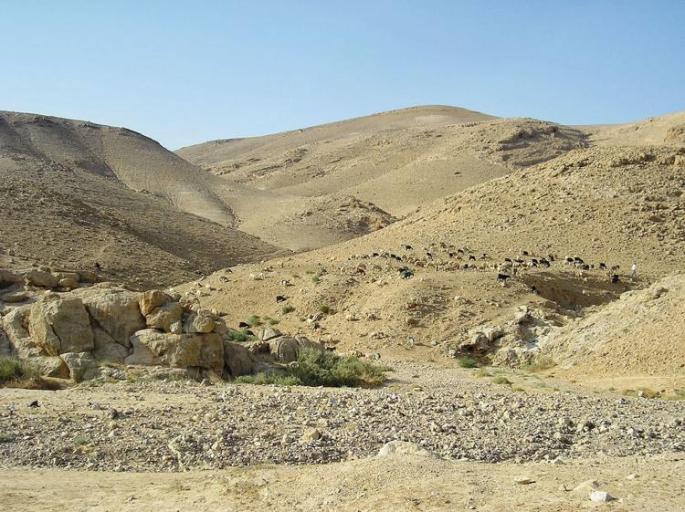
If you look at the picture I have attached to this post, you will see the “green pastures” of Israel. Look closely. Do you see the sheep grazing on the hillside? Can you see the little tufts of green grass on the hillside in the desert? These are the green pastures of David’s world, of Jesus’ world, and of Psalm 23.

In the desert that is very little water and virtually no grass, yet this is where you can raise sheep in Israel. Each night a strong wind from the west blows humid air from the Mediterranean Sea against the hot desert hills and the condensation occurs. Overnight this moisture causes green tufts of grass to sprout that in the morning provide grass for the sheep, but by mid afternoon the sun has scorched everything there. Unless the sheep are in the right place at the right time they will have nothing to eat.

Do you know the most common cause of death in the desert? Drowning. Seriously, I’m not making this up! Though it doesn’t rain in the desert, it pours in the mountains and the mountains cannot absorb the water. These torrential runoffs stream through dry riverbeds (wadi’s) into the desert. Often there is water left over in the bottom of these wadi’s, and that’s the problem. When you attempt to get water out of these wadi’s you leave the rock often get stuck in the miry mud that is left.

People drown like this every year because they see water, their thirst in the desert drives them into these wadi canyons and when 70 feet of floodwater rushes through the canyon at once they cannot get out. Desert people will tell you instead to get your water from springs, also known as “still” or “quiet waters.” In these places there is no danger.

So who knows where the grass will appear in the morning? Who knows the difference between flood waters and quiet waters? The sheep? No, it’s the Shepherd that knows these things. So what does it mean to have Yahweh as your shepherd? And what what might happen if we don’t listen to our Shepherd?

I could write about this psalm all day, but hopefully I’ve provided enough to get you thinking. Here’s a couple of takeaways. First, read this psalm with the cultural and geographical information from above and see what David might be saying. Is he saying we will have everything we want because we follow Yahweh, or is he saying we don’t have to worry because because the Shepherd will always give us just what we need when we need it? The words of Jesus seem to echo here as well!

“Therefore I tell you, do not worry about your life, what you will eat or drink; or about your body or what you will wear. Is not life more than food, and the body more than clothes?…But seek first the kingdom and his righteousness, and all theses things will be given to you as well.”

Matthew 6:25, 33 NIV

Second, if Psalm 23 is Messianic in nature, then read this as if Jesus were speaking. Can you see his story here? And finally, read this in your voice. What does it mean to dwell in the house of Yahweh forever? What does it look like to dwell in his house now?

May Yahweh bless you as you spend time wrestling with his word today. Shalom.

Daily Psalms – Psalm 13

Our Psalm reading today is Psalm 11-15.

I was planning on focusing on a different Psalm today, but in light of the tragedy unfolding, I will save that for another time. Today we just need to lament and pray.

Why is there such evil in the world? Why does it seem like wickedness rules? At the time of this writing NBC confirms at least 19 people have been murdered in a mass shooting today in El Paso, TX. Though I seek for answers I know the cause: The sinful nature of humans.

Psalms 11-14 are a series of laments. They ask questions of why evil exists, why wicked people inflict pain upon the innocent, and pleads to Yahweh for salvation. And then Psalm 15 gives us a glimpse of the coming (returning) Messiah Jesus. The reading seems to say “weeping may stay for the night, but rejoicing comes in the morning.”

Yahweh calls us to love him above all else, and love our neighbor as ourselves. Jesus called these the Greatest Commands. And yet our culture says that God is not real, and promotes a culture of violence in television, movies, and video games that glorifies shooting whomever you don’t agree with. Our entertainment is death and destruction, and we wonder why these things happen.

We are not alone in our laments when evil seems to rule. Psalm 13, a psalm of David begs these same questions. “Has Yahweh forgotten us? How long will evil rule?”

Today we mourn great loss. Today we lament great tragedy. We beg Yahweh to move so nothing like this ever has to happen again. But David reminds us that Yahweh has not forgotten us, that he will not forget us, and that salvation is coming.

But I trust in your unfailing love;
    my heart rejoices in your salvation.
 I will sing the Lord’s praise,
    for he has been good to me.

Psalm 13:5-6 NIV

May the God of all comfort heal our broken land. Shalom.

Click here for today’s PSALM READING

Daily Psalms – Psalm 8

Daily Psalm Reading – Psalms 6-10

Today we will spend some time reflecting on Psalm 8, a psalm of David that is closely tied to the narrative of both Job, and the writer of Hebrews (as well as several other passages in Scripture.)

Psalm 8 is the first psalm of praise in the psalter, and comes at the end of a series of Psalms about suffering (Ps. 3-7) that certainly resonate with Job. Yet just like Job, the Psalter brings us into a time of great praise of Yahweh at the end of the suffering, almost as if the suffering itself has allowed us to see God’s glory and majesty in every aspect of creation, and the result is praise!

I think the key to understanding Psalm 8 is verse 4:

“…what is mankind that you are mindful of them, human beings that you care for them?”

Psalm 8:4 NIV

Again, this verse resonates with Job’s questions as well:

“What is mankind that you make so much of them, that you give them so much attention…”

Job 7:17 NIV

When we consider the vastness of creation, the glory of God proclaimed in the heavens, why in the world would God care so much for us?

Verses 5-8 answer the question posed in verse 4 by returning to the Garden of Eden and the mission we are given to co-rule creation with Yahweh (Gen. 1:26-28). David then lists out all the creatures from the days of creation (Gen. 1). God has subjected creation to us! He created us to co-rule creation with him. What an awesome responsibility!

This is the imagery that the writer of Hebrews draws upon, directly quoting verses 4-6, and then makes the following statements:

“In putting everything under them (mankind), God left nothing that is not subject to them. Yet at present we do not see everything subject to them. But we do see Jesus, who was made lower than the angels for a little while, now crowned with glory and honor because he suffered death…the pioneer of our salvation perfect through what he suffered.”

Hebrews 2:8-9, 10 NIV

Psalm 1 gives us a great picture of who the Messiah should be; one who mediates on God’s scripture day and night. Psalm 2 ends by telling us “Blessed are all who take refuge in him (Messianic King).” Then we see a period of suffering in Psalms 3-7, and Psalm 8 celebrates that humanity has all creation subject to them, and the Hebrew writer points that image to Jesus, the firstfruits of the resurrection. We too will ultimately join with Jesus in our resurrection, but at the moment we are still bound by the constraints of our human bodies, and the effects of sin in our lives.

But for now we do have a job. We have responsibility from Yahweh to co-rule creation under the Lordship of our Messiah Jesus, in order to establish his kingdom “on earth as it is in heaven.” Since everything has already been subjected to Jesus (including you and me), we serve at his pleasure. We follow him and him alone! We carry out his mission on earth.

What an awesome responsibility we have! And the only fitting answer to such an awesome responsibility is praise!

“Yahweh, our Lord, how majestic is your name in all the earth!”

Psalm 8:9

Blessings!

DAILY PSALM READING – PSALMS 6-10

Daily Psalms – Psalm 1

I’ve started doing something on Facebook recently that I will now carry over to my blog: A daily Psalm meditation in conjunction with my daily psalm readings. I picked up a practice from N.T. Wright some time back of daily reading the psalms. I read 5 Psalms per day, and begin and end each day by reading and meditating on them. 5 psalms per day X 30 days per month = 150 psalms. Thus, each month (we flex a bit for February) we read through the entire Psalter. Why? I really appreciate Dr. Tim Mackie’s summary of the Psalms:

Psalms: The prayerbook of God’s people who are striving to be faithful to the Torah, and waiting for the Messianic Kingdom.

Dr. Tim Mackie – The Bible Project

“But wait, didn’t the Messianic Kingdom come at Pentecost? After all Jesus has already established his church!” The answer to that is Yes, and No. The kingdom is here, and not yet. While it has been established, we eagerly await his return to destroy evil once and for all, and establish the new Jerusalem where all of God’s people will spend eternity with him (read the end of Revelation if this is new material for you.)

So in a way we are just like those original readers of the Psalter who are awaiting the Messiah to set everything straight, though we have the advantage of knowing our Messiah Jesus and his teachings as we wait for his ultimate return. In addition, the Psalms are what Jesus would have meditated on in his lifetime. These were the worship songs of his day. As a Jewish boy he would have memorized the entire psalter. The words of the Psalms saturated the mind, heart, and life of Jesus. Shouldn’t we seek to have them do the same for us?

Each day I’ll choose one psalm from my daily reading and reflect/meditate on it a bit. My hope is that after 5 months I will have written at least a little reflection on the entire Psalter. Today we will look at Psalm 1. I memorized this psalm in middle school for a competition, and it has never left my memory. Probably my favorite psalm.

In Psalm 1 we have the anonymous psalmist reminding us that it is meditation on the word of Yahweh that leads to life. In contrast, the psalmist looks at the wicked and says they are “like chaff.” If you are unfamiliar with that term, chaff is the little shell that encases a grain of wheat. In the process of harvesting the wheat, the chaff is removed from the grain through a process called “winnowing” where the wheat is thrown into the air which separates the grain from the chaff. The wind blows away the light chaff, but the grain falls back down to the ground and is used.

In other words, the wicked are compared to useless the useless byproduct of wheat that isn’t fit for consumption. They will be “blown away” and destroyed. But those who dwell on the Torah of Yahweh are like a never ending source of nourishment and peace. It’s almost as if the arrangers of the psalter are saying, “Spend time in this book and you will be a blessing to everyone as you yourself are blessed by God in doing so.”

Spend time in Scripture. Spend time in the Psalms. Spend time in the Gospels. Spend time getting the story and the very words of Jesus in your head and your heart. And you will be blessed, and be a blessing, in doing so. Grace and Peace.

Click here for today’s reading of Psalms 1-5

Jesus and the Female Disciples – Part 2

Today we continue our look at the female disciples that Luke mentions throughout his Gospel. Their introduction in the opening verses of chapter 8 leads to a thread throughout Luke’s story of the “others,” or the “rest” of those that followed Jesus. Luke makes it clear that his story isn’t one of Jesus and the 12. It is also a story of the “others.”

As Luke’s narrative unfolds, we find Jesus arrested and on trial after being betrayed by Judas. At this point the 12 disappear from the story, except for Peter. Peter follows Jesus through part of the trial, but ultimately denies his relationship with Jesus three times, then disappears from the narrative until after the resurrection. Luke does focus on a particular group throughout the crucifixion and resurrection: the women. 

“A large number of people followed him, including women who mourned and wailed for him.”

Luke 23:27 NIV

After Jesus breathes his last, and the centurion confesses Jesus’ righteousness, we are told that many of the witnesses of the crucifixion leave, except for some who stayed.

“But all those who knew him, including the women who had followed him from Galilee, stood at a distance, watching these things.”

Luke 23:49 NIV

“The women who had come with Jesus from Galilee followed Joseph and saw the tomb and how his body was laid in it. Then they went home and prepared spices and perfume.”

Luke 23:55-56 NIV

“On the first day of the week, very early in the morning, the women took the spices they had prepared and went to the tomb.”

Luke 24:1 NIV

“When they (women) came back from the tomb they told all these things to the Eleven and to all the others. It was Mary Magdalene, Joanna, Mary the mother of James, and the others with them who told this to the apostles.”

Luke 24:9-10 NIV

“While they were still talking about this, Jesus himself stood among them and said to them, “Peace be with you.”

Luke 24:36 NIV

So who were the first preachers of the resurrection? The women. Who did they tell? The Eleven and “the others,” both male and female.  And who does Jesus appear to and commission after the resurrection? All of them! (And in case you are unsure of this, go to Acts 1:13-15 to see this continue.)

Luke makes it very clear. The commission to preach this news starting in Jerusalem (Lk. 24:47-48, Acts 1:8) is the responsibility of the Eleven, the women, and the others, as we’ve already seen them do! This commission by Jesus has not been retracted. Next week we’ll see how Luke carries this commission into the mission of the early church in Acts 1 & 2.

Jesus and the Female Disciples

Today we continue our look at Luke’s gospel and some of the women he includes in his story about Jesus. Luke has a major focus on the role of women in the ministry of Jesus and this week we look at some of the female disciples and supporters of Jesus’ ministry.

Luke 8:1-3 tells us about “many” single and married women who not only traveled with Jesus, but supported his ministry financially. These women are not the twelve, but they are disciples and benefactors nonetheless. Benefactors (financial supporters) in the ancient world would financially support an effort they supported, but that did not mean they would physically participate in that effort. These women are not simply benefactors, they are disciples traveling with Jesus, involved physically in his ministry, and learning to be just like the Messiah. A disciple would eventually go on to have their own students and teach in a way similar to their own teacher.

The fact that Luke tells us of Jesus and these women as disciples, a very unusual practice in the ancient world, tells us something about Jesus. Their presence in support and practice of Jesus’ ministry shows that Jesus wasn’t constrained by, nor concerned with cultural ideas about the roles of women. Culture considered them property to be kept in the home, but Jesus included them as disciples, ones who could travel along side, support, and assist in his ministry.

This detail sets up the often misunderstood story of Mary and Martha at the end of Luke 10. Many tell this story as a lesson on priorities; Jesus is more important than housework. While this is true, it misses the context of what Luke is telling us about Jesus. Luke always gives a female counterpart to the males in his gospel, showing that following Jesus and serving in the Kingdom is not a job relegated to men. Luke gives us Elizabeth and Zechariah, Mary and Joseph, Simeon and Anna, the widow of Zarephath and Naaman (ch. 4), the centurion and the widow (ch. 7), the widow with the coins and the shepherd (ch. 15). Here in chapter 8 and chapter 10 we see the female complement to the male disciples.

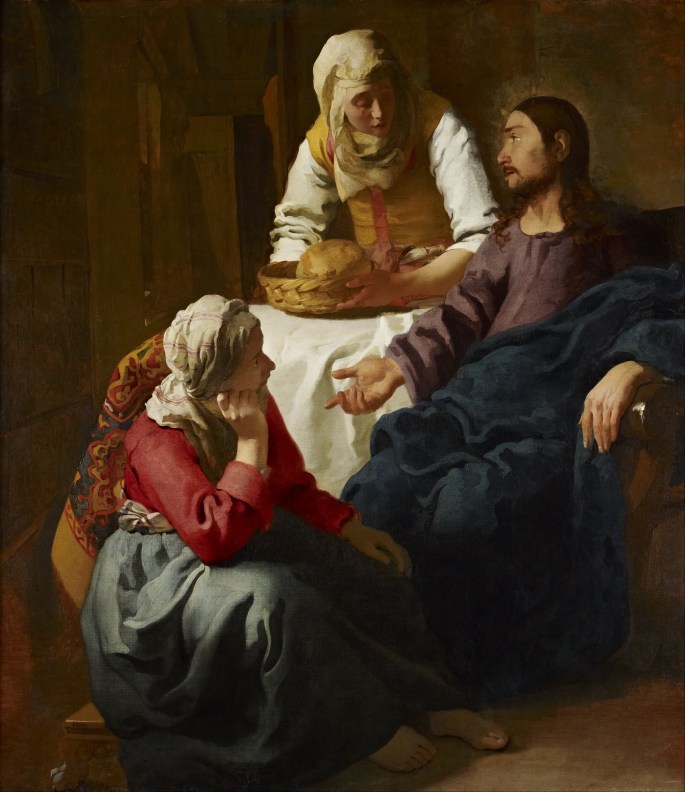
Luke tells us that Mary “sat at the Lord’s feet listening to what he said” (10:39). In doing so, Mary is taking up the role of a disciple, something a male would do in that culture. She is breaking a cultural rule (that many other women from ch. 8 did as well). Martha wants Jesus to rebuke Mary, but Jesus affirms that “Mary has chosen what is better, and it will not be taken away from her.” (10:42)

This story goes with the preceding story of the good Samaritan, and is an example of the Greatest Commands lived out. The Samaritan is the hero of the first story, and a female disciple is the hero of the second story. These are two upside down images of obeying the Greatest Commands in a culture that valued neither of these heroes. Luke is clearly portraying Jesus as being against the rules and boundaries of the culture in which they lived. The Kingdom of Heaven doesn’t follow societal norms, it follows Jesus. These stories also call us to radically break with tradition and culture, disregard all else, and follow the example of Jesus. In Luke’s Gospel, the teachings and actions of Jesus remind us that the Kingdom of Heaven is a place where Jews and Samaritans, as well as men and women can serve as equals. (See Gal. 3:28)

Why the Church Needs to Talk About Huldah

I was at a Bible conference recently and the speaker asked for a show of hands by asking the question, “Who here has heard of Huldah?” Almost nobody raised their hands. Sadly this important prophet has been forgotten about, even though the king sought her out! Her story is part of the narrative around king Josiah restoring worship in the Temple in Jerusalem, and can be found in both 2 Kings 22, and 2 Chronicles 34. King Josiah is not like his father or grandfather. They were wicked, but Josiah decided to follow God like his ancestor, King David (2 Kings 22:2). Josiah removed all the idols and altars to pagan gods. He drove out the spiritists and mediums, all the household gods and brought the nation back to worshipping Yahweh.

Part of this was due to the discovery of the book of the Law when the Temple was being repaired, likely the complete Torah scroll or at least Deuteronomy. At this point in history Israel had no know knowledge of the Torah. After hearing the book read to him, Josiah responds:

 “Go and inquire of the Lord for me and for the people and for all Judah about what is written in this book that has been found. Great is the Lord’s anger that burns against us because those who have gone before us have not obeyed the words of this book; they have not acted in accordance with all that is written there concerning us.”

2 Kings 22:12-13

This is where the high priest and the advisors consult a prophet. Now during this time there were several well known prophets in Jerusalem who had been prophesying against the wickedness of idolatry. You’ve probably heard of them too, Jeremiah and Zephaniah. You can read their prophecies in your Old Testament. Yet when it was time to “inquire of the Lord” as to the validity of the words in the Book of the Law, the leaders of Israel go to Huldah. 

Huldah is a prophet, a married woman, and the keeper of the garments (NIV translates “wardrobe”). This must tell us something about Huldah. The great prophets Jeremiah and Zephaniah are prophesying in Jerusalem and yet they go to Huldah. Why? We can speculate all day about her social status, her past prophecies, why she is more highly sought than prophets we know more about today. But in the end what we do know is that when Israel’s leaders wanted to “inquire of the Lord” and validate the Book of the Law, God sends Huldah into the story.

In this narrative we find for the first time someone validating the words of the Law as being God’s word. We find that the Book of the Law is actually Scripture by the Lord’s prophecy through Huldah. Nowhere in this passage is Huldah criticized or reprimanded for teaching these men. Nowhere are these men condemned or criticized for allowing a woman to teach them. This leads to a question: If we say it’s wrong for a woman to teach a man, why does God teach these men through a woman? The story of Huldah is preserved twice in Scripture because it is useful for teaching, rebuking, correcting, and training in righteousness. 

So what can we learn from Huldah? We learn that even though Jeremiah and Zephaniah had God-given prophetic roles in Jerusalem during this time, God gave Hulda a job too. And that job was to teach the men leading Israel about God’s Word. Perhaps we would be wise to remember that God gifts “each one” as he determines (1 Cor. 14:4-11). We don’t make the rules. God does.

Eve: Equality with Adam – Part 2

We continue our look at the women of the Bible by looking again at Eve’s story. Last week we noted that nothing in Genesis 1 or 2 indicates that Eve is somehow inferior to Adam. In fact, it proves quite the opposite. Both Adam and Eve are fully created in the image of God. We ended with a question last week: Who sinned first? Adam or Eve? Let’s look at a few verses to find the answer.

And Adam was not the one deceived; it was the woman who was deceived and became a sinner.

1 Timothy 2:14 NIV

Therefore, just as sin entered the world through one man, and death through sin, and in this way death came to all people, because all sinned…

Romans 5:12 NIV

For since death came through a man, the resurrection of the dead comes also through a man. For as in Adam all die, so in Christ all will be made alive.

1 Corinthians 15:21-22 NIV

Confused yet? Upon first glance it would appear Paul is too, but not quite. Let’s look at one more verse.

The Lord God took the man and put him in the Garden of Eden to work it and take care of it.

Genesis 2:15 NIV

The word for “take care of it” would be the Hebrew word shamar which means “to keep, guard, keep watch and ward, protect, save life.” Adam was charged as the keeper and protector of the Garden. Yet in Genesis chapter 3 as he is with Eve (3:6), he fails to do this. (by the way, all of the serpent’s statements are made using the plural “you,” not singular).

Eve was the first to be deceived (per Paul), but Adam failed to shamar his wife and the Garden from the deception of the serpent. Notice also that both the humans and the serpent are punished; first the serpent, then Eve, then Adam. All three sinned.

So who sinned first? Could it have been Adam for not kicking the serpent out of the Garden? Perhaps. The serpent for deceiving Eve (3:14)? It would seem likely this was the first, although the serpent isn’t human (that’s a theological discussion for another time). Was it Eve who ate the fruit?

I think the way the story is told is intentional to show how intertwined we humans are. Adam was supposed to obey God through his shamar of the Garden and Eve. He failed at this at the same time Eve failed at obeying God’s command through the deception of the serpent. Genesis 3 is not an elevation of man over woman. It shows us that sin is a problem that affects all creation – humans, animals, and even the garden which is now devoid of its human caretakers. Sin affects everything. This is not a problem that we can blame on Eve or Adam. I think Paul understood this as well.

There is no difference…for all have sinned and fall short of the glory of God, and all are justified freely by his grace through the redemption that came by Christ Jesus.

Romans 3:22-24 NIV

Question: So does God want Adam to now rule over Eve because they have sinned?