
Daily Psalms – Psalm 20

Daily Psalm Reading – Psalm 16-20

(Sunday’s are hard. It’s very tiring on those of us who preach regularly. Saturday nights offer little sleep as God shapes our sermons in our heads. We awake early Sunday and arrive early to pray and seek the voice and wisdom of God. We pour ourselves out and then come home and crash, only to do it all over again. All this to say the tank is pretty empty on Sundays, so don’t expect this to be an overly deep, or lengthy reflection today.)

Today we meditate on Psalm 20 and the promised Messiah. Psalm 20 – 23 focus on David’s seed (the Messiah, Jesus) and his deliverance and rule over the nations. Here we encounter psalms of prophecy that tell us about Jesus.

Verse 6 states: “Now this I know: The LORD gives victory to his anointed.” The Hebrew word for anointed is “messiah.” No matter how upside down this world seems, no matter how chaotic and out of control, victory will be given to our Messiah Jesus!

After the first 5 verses of prayer and blessing over the coming (returning) Messiah, verses 6-9 point us to what the Messiah will do and where we should put our trust. The admonition to not trust in earthly power, but in the name of Yahweh our God is one we need to hear today. In a time where most pray “Our god which art in Washington…” we need to remember our help comes from Yahweh!

I’ll confess it is a struggle not to trust in our own strength. As the psalmist says we want to “trust in chariots and…horses.” The idea of picking ourselves up by our bootstraps isn’t a Biblical one. Rather we are encouraged time and time again to rely on our God, not our own abilities. Trusting in anything other than our God results in failure (v.8).

Today I pray we all learn to trust our God, to believe that our Messiah has been given victory over evil, and will return soon to eliminate it completely. Come Lord Jesus!

To echo the final words of the psalm, “Yahweh, give victory to King Jesus! Answer our prayers!” Shalom.

CLICK HERE TO READ TODAY’s DAILY PSALM READING – PSALM 16-20

Daily Psalms – Psalm 13

Our Psalm reading today is Psalm 11-15.

I was planning on focusing on a different Psalm today, but in light of the tragedy unfolding, I will save that for another time. Today we just need to lament and pray.

Why is there such evil in the world? Why does it seem like wickedness rules? At the time of this writing NBC confirms at least 19 people have been murdered in a mass shooting today in El Paso, TX. Though I seek for answers I know the cause: The sinful nature of humans.

Psalms 11-14 are a series of laments. They ask questions of why evil exists, why wicked people inflict pain upon the innocent, and pleads to Yahweh for salvation. And then Psalm 15 gives us a glimpse of the coming (returning) Messiah Jesus. The reading seems to say “weeping may stay for the night, but rejoicing comes in the morning.”

Yahweh calls us to love him above all else, and love our neighbor as ourselves. Jesus called these the Greatest Commands. And yet our culture says that God is not real, and promotes a culture of violence in television, movies, and video games that glorifies shooting whomever you don’t agree with. Our entertainment is death and destruction, and we wonder why these things happen.

We are not alone in our laments when evil seems to rule. Psalm 13, a psalm of David begs these same questions. “Has Yahweh forgotten us? How long will evil rule?”

Today we mourn great loss. Today we lament great tragedy. We beg Yahweh to move so nothing like this ever has to happen again. But David reminds us that Yahweh has not forgotten us, that he will not forget us, and that salvation is coming.

But I trust in your unfailing love;
    my heart rejoices in your salvation.
 I will sing the Lord’s praise,
    for he has been good to me.

Psalm 13:5-6 NIV

May the God of all comfort heal our broken land. Shalom.

Click here for today’s PSALM READING

Daily Psalms – Psalm 8

Daily Psalm Reading – Psalms 6-10

Today we will spend some time reflecting on Psalm 8, a psalm of David that is closely tied to the narrative of both Job, and the writer of Hebrews (as well as several other passages in Scripture.)

Psalm 8 is the first psalm of praise in the psalter, and comes at the end of a series of Psalms about suffering (Ps. 3-7) that certainly resonate with Job. Yet just like Job, the Psalter brings us into a time of great praise of Yahweh at the end of the suffering, almost as if the suffering itself has allowed us to see God’s glory and majesty in every aspect of creation, and the result is praise!

I think the key to understanding Psalm 8 is verse 4:

“…what is mankind that you are mindful of them, human beings that you care for them?”

Psalm 8:4 NIV

Again, this verse resonates with Job’s questions as well:

“What is mankind that you make so much of them, that you give them so much attention…”

Job 7:17 NIV

When we consider the vastness of creation, the glory of God proclaimed in the heavens, why in the world would God care so much for us?

Verses 5-8 answer the question posed in verse 4 by returning to the Garden of Eden and the mission we are given to co-rule creation with Yahweh (Gen. 1:26-28). David then lists out all the creatures from the days of creation (Gen. 1). God has subjected creation to us! He created us to co-rule creation with him. What an awesome responsibility!

This is the imagery that the writer of Hebrews draws upon, directly quoting verses 4-6, and then makes the following statements:

“In putting everything under them (mankind), God left nothing that is not subject to them. Yet at present we do not see everything subject to them. But we do see Jesus, who was made lower than the angels for a little while, now crowned with glory and honor because he suffered death…the pioneer of our salvation perfect through what he suffered.”

Hebrews 2:8-9, 10 NIV

Psalm 1 gives us a great picture of who the Messiah should be; one who mediates on God’s scripture day and night. Psalm 2 ends by telling us “Blessed are all who take refuge in him (Messianic King).” Then we see a period of suffering in Psalms 3-7, and Psalm 8 celebrates that humanity has all creation subject to them, and the Hebrew writer points that image to Jesus, the firstfruits of the resurrection. We too will ultimately join with Jesus in our resurrection, but at the moment we are still bound by the constraints of our human bodies, and the effects of sin in our lives.

But for now we do have a job. We have responsibility from Yahweh to co-rule creation under the Lordship of our Messiah Jesus, in order to establish his kingdom “on earth as it is in heaven.” Since everything has already been subjected to Jesus (including you and me), we serve at his pleasure. We follow him and him alone! We carry out his mission on earth.

What an awesome responsibility we have! And the only fitting answer to such an awesome responsibility is praise!

“Yahweh, our Lord, how majestic is your name in all the earth!”

Psalm 8:9

Blessings!

DAILY PSALM READING – PSALMS 6-10

Daily Psalms – Psalm 1

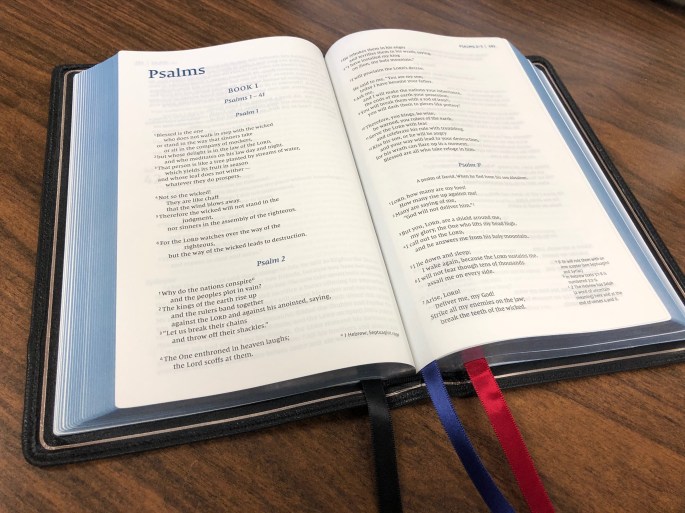
I’ve started doing something on Facebook recently that I will now carry over to my blog: A daily Psalm meditation in conjunction with my daily psalm readings. I picked up a practice from N.T. Wright some time back of daily reading the psalms. I read 5 Psalms per day, and begin and end each day by reading and meditating on them. 5 psalms per day X 30 days per month = 150 psalms. Thus, each month (we flex a bit for February) we read through the entire Psalter. Why? I really appreciate Dr. Tim Mackie’s summary of the Psalms:

Psalms: The prayerbook of God’s people who are striving to be faithful to the Torah, and waiting for the Messianic Kingdom.

Dr. Tim Mackie – The Bible Project

“But wait, didn’t the Messianic Kingdom come at Pentecost? After all Jesus has already established his church!” The answer to that is Yes, and No. The kingdom is here, and not yet. While it has been established, we eagerly await his return to destroy evil once and for all, and establish the new Jerusalem where all of God’s people will spend eternity with him (read the end of Revelation if this is new material for you.)

So in a way we are just like those original readers of the Psalter who are awaiting the Messiah to set everything straight, though we have the advantage of knowing our Messiah Jesus and his teachings as we wait for his ultimate return. In addition, the Psalms are what Jesus would have meditated on in his lifetime. These were the worship songs of his day. As a Jewish boy he would have memorized the entire psalter. The words of the Psalms saturated the mind, heart, and life of Jesus. Shouldn’t we seek to have them do the same for us?

Each day I’ll choose one psalm from my daily reading and reflect/meditate on it a bit. My hope is that after 5 months I will have written at least a little reflection on the entire Psalter. Today we will look at Psalm 1. I memorized this psalm in middle school for a competition, and it has never left my memory. Probably my favorite psalm.

In Psalm 1 we have the anonymous psalmist reminding us that it is meditation on the word of Yahweh that leads to life. In contrast, the psalmist looks at the wicked and says they are “like chaff.” If you are unfamiliar with that term, chaff is the little shell that encases a grain of wheat. In the process of harvesting the wheat, the chaff is removed from the grain through a process called “winnowing” where the wheat is thrown into the air which separates the grain from the chaff. The wind blows away the light chaff, but the grain falls back down to the ground and is used.

In other words, the wicked are compared to useless the useless byproduct of wheat that isn’t fit for consumption. They will be “blown away” and destroyed. But those who dwell on the Torah of Yahweh are like a never ending source of nourishment and peace. It’s almost as if the arrangers of the psalter are saying, “Spend time in this book and you will be a blessing to everyone as you yourself are blessed by God in doing so.”

Spend time in Scripture. Spend time in the Psalms. Spend time in the Gospels. Spend time getting the story and the very words of Jesus in your head and your heart. And you will be blessed, and be a blessing, in doing so. Grace and Peace.

Click here for today’s reading of Psalms 1-5

Jesus and the Female Disciples – Part 2

Today we continue our look at the female disciples that Luke mentions throughout his Gospel. Their introduction in the opening verses of chapter 8 leads to a thread throughout Luke’s story of the “others,” or the “rest” of those that followed Jesus. Luke makes it clear that his story isn’t one of Jesus and the 12. It is also a story of the “others.”

As Luke’s narrative unfolds, we find Jesus arrested and on trial after being betrayed by Judas. At this point the 12 disappear from the story, except for Peter. Peter follows Jesus through part of the trial, but ultimately denies his relationship with Jesus three times, then disappears from the narrative until after the resurrection. Luke does focus on a particular group throughout the crucifixion and resurrection: the women. 

“A large number of people followed him, including women who mourned and wailed for him.”

Luke 23:27 NIV

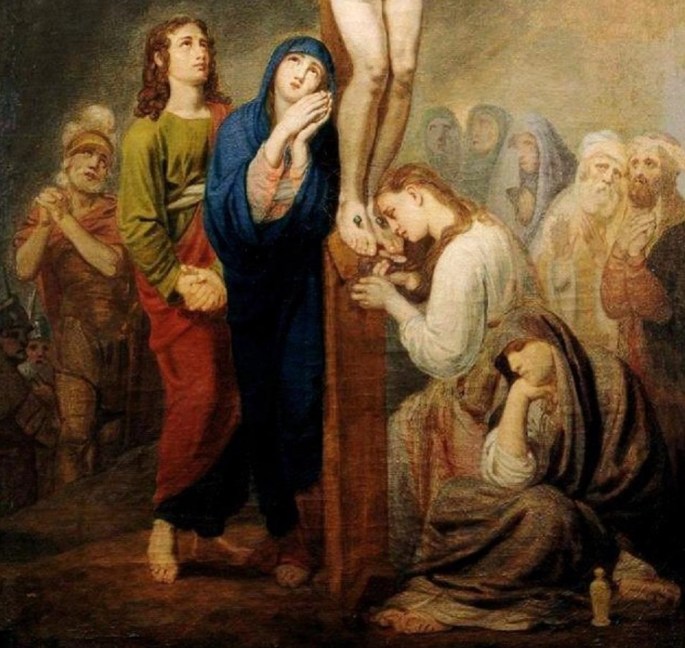
After Jesus breathes his last, and the centurion confesses Jesus’ righteousness, we are told that many of the witnesses of the crucifixion leave, except for some who stayed.

“But all those who knew him, including the women who had followed him from Galilee, stood at a distance, watching these things.”

Luke 23:49 NIV

“The women who had come with Jesus from Galilee followed Joseph and saw the tomb and how his body was laid in it. Then they went home and prepared spices and perfume.”

Luke 23:55-56 NIV

“On the first day of the week, very early in the morning, the women took the spices they had prepared and went to the tomb.”

Luke 24:1 NIV

“When they (women) came back from the tomb they told all these things to the Eleven and to all the others. It was Mary Magdalene, Joanna, Mary the mother of James, and the others with them who told this to the apostles.”

Luke 24:9-10 NIV

“While they were still talking about this, Jesus himself stood among them and said to them, “Peace be with you.”

Luke 24:36 NIV

So who were the first preachers of the resurrection? The women. Who did they tell? The Eleven and “the others,” both male and female.  And who does Jesus appear to and commission after the resurrection? All of them! (And in case you are unsure of this, go to Acts 1:13-15 to see this continue.)

Luke makes it very clear. The commission to preach this news starting in Jerusalem (Lk. 24:47-48, Acts 1:8) is the responsibility of the Eleven, the women, and the others, as we’ve already seen them do! This commission by Jesus has not been retracted. Next week we’ll see how Luke carries this commission into the mission of the early church in Acts 1 & 2.

Jesus and the Female Disciples

Today we continue our look at Luke’s gospel and some of the women he includes in his story about Jesus. Luke has a major focus on the role of women in the ministry of Jesus and this week we look at some of the female disciples and supporters of Jesus’ ministry.

Luke 8:1-3 tells us about “many” single and married women who not only traveled with Jesus, but supported his ministry financially. These women are not the twelve, but they are disciples and benefactors nonetheless. Benefactors (financial supporters) in the ancient world would financially support an effort they supported, but that did not mean they would physically participate in that effort. These women are not simply benefactors, they are disciples traveling with Jesus, involved physically in his ministry, and learning to be just like the Messiah. A disciple would eventually go on to have their own students and teach in a way similar to their own teacher.

The fact that Luke tells us of Jesus and these women as disciples, a very unusual practice in the ancient world, tells us something about Jesus. Their presence in support and practice of Jesus’ ministry shows that Jesus wasn’t constrained by, nor concerned with cultural ideas about the roles of women. Culture considered them property to be kept in the home, but Jesus included them as disciples, ones who could travel along side, support, and assist in his ministry.

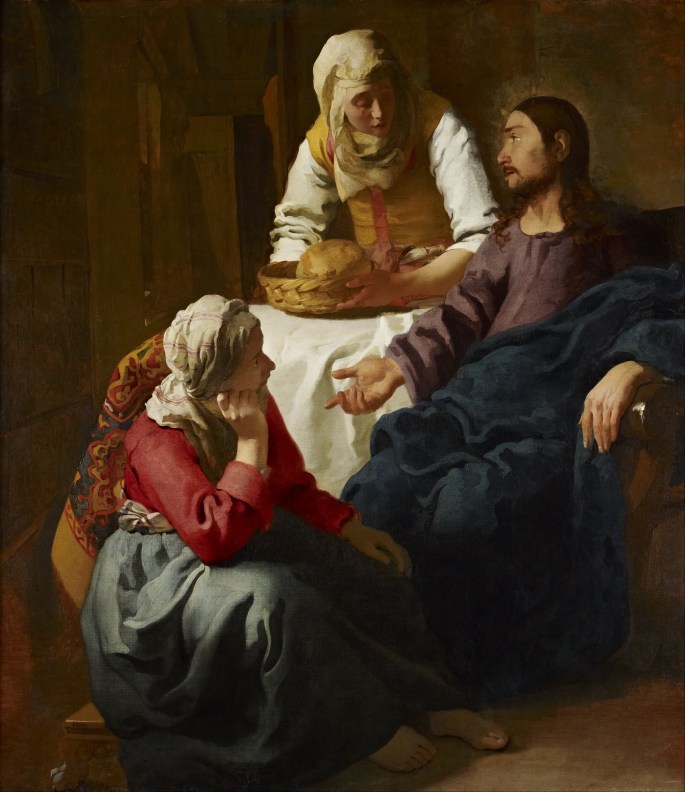
This detail sets up the often misunderstood story of Mary and Martha at the end of Luke 10. Many tell this story as a lesson on priorities; Jesus is more important than housework. While this is true, it misses the context of what Luke is telling us about Jesus. Luke always gives a female counterpart to the males in his gospel, showing that following Jesus and serving in the Kingdom is not a job relegated to men. Luke gives us Elizabeth and Zechariah, Mary and Joseph, Simeon and Anna, the widow of Zarephath and Naaman (ch. 4), the centurion and the widow (ch. 7), the widow with the coins and the shepherd (ch. 15). Here in chapter 8 and chapter 10 we see the female complement to the male disciples.

Luke tells us that Mary “sat at the Lord’s feet listening to what he said” (10:39). In doing so, Mary is taking up the role of a disciple, something a male would do in that culture. She is breaking a cultural rule (that many other women from ch. 8 did as well). Martha wants Jesus to rebuke Mary, but Jesus affirms that “Mary has chosen what is better, and it will not be taken away from her.” (10:42)

This story goes with the preceding story of the good Samaritan, and is an example of the Greatest Commands lived out. The Samaritan is the hero of the first story, and a female disciple is the hero of the second story. These are two upside down images of obeying the Greatest Commands in a culture that valued neither of these heroes. Luke is clearly portraying Jesus as being against the rules and boundaries of the culture in which they lived. The Kingdom of Heaven doesn’t follow societal norms, it follows Jesus. These stories also call us to radically break with tradition and culture, disregard all else, and follow the example of Jesus. In Luke’s Gospel, the teachings and actions of Jesus remind us that the Kingdom of Heaven is a place where Jews and Samaritans, as well as men and women can serve as equals. (See Gal. 3:28)

Why the Church Needs to Talk About Huldah

I was at a Bible conference recently and the speaker asked for a show of hands by asking the question, “Who here has heard of Huldah?” Almost nobody raised their hands. Sadly this important prophet has been forgotten about, even though the king sought her out! Her story is part of the narrative around king Josiah restoring worship in the Temple in Jerusalem, and can be found in both 2 Kings 22, and 2 Chronicles 34. King Josiah is not like his father or grandfather. They were wicked, but Josiah decided to follow God like his ancestor, King David (2 Kings 22:2). Josiah removed all the idols and altars to pagan gods. He drove out the spiritists and mediums, all the household gods and brought the nation back to worshipping Yahweh.

Part of this was due to the discovery of the book of the Law when the Temple was being repaired, likely the complete Torah scroll or at least Deuteronomy. At this point in history Israel had no know knowledge of the Torah. After hearing the book read to him, Josiah responds:

 “Go and inquire of the Lord for me and for the people and for all Judah about what is written in this book that has been found. Great is the Lord’s anger that burns against us because those who have gone before us have not obeyed the words of this book; they have not acted in accordance with all that is written there concerning us.”

2 Kings 22:12-13

This is where the high priest and the advisors consult a prophet. Now during this time there were several well known prophets in Jerusalem who had been prophesying against the wickedness of idolatry. You’ve probably heard of them too, Jeremiah and Zephaniah. You can read their prophecies in your Old Testament. Yet when it was time to “inquire of the Lord” as to the validity of the words in the Book of the Law, the leaders of Israel go to Huldah. 

Huldah is a prophet, a married woman, and the keeper of the garments (NIV translates “wardrobe”). This must tell us something about Huldah. The great prophets Jeremiah and Zephaniah are prophesying in Jerusalem and yet they go to Huldah. Why? We can speculate all day about her social status, her past prophecies, why she is more highly sought than prophets we know more about today. But in the end what we do know is that when Israel’s leaders wanted to “inquire of the Lord” and validate the Book of the Law, God sends Huldah into the story.

In this narrative we find for the first time someone validating the words of the Law as being God’s word. We find that the Book of the Law is actually Scripture by the Lord’s prophecy through Huldah. Nowhere in this passage is Huldah criticized or reprimanded for teaching these men. Nowhere are these men condemned or criticized for allowing a woman to teach them. This leads to a question: If we say it’s wrong for a woman to teach a man, why does God teach these men through a woman? The story of Huldah is preserved twice in Scripture because it is useful for teaching, rebuking, correcting, and training in righteousness. 

So what can we learn from Huldah? We learn that even though Jeremiah and Zephaniah had God-given prophetic roles in Jerusalem during this time, God gave Hulda a job too. And that job was to teach the men leading Israel about God’s Word. Perhaps we would be wise to remember that God gifts “each one” as he determines (1 Cor. 14:4-11). We don’t make the rules. God does.

Ruth: A Story of Hesed

The story of Ruth, although only four chapters long in your Bible, is far to massive of a story to hope to distill in one article. There are too many intertwining themes to be able to simply state “this is what the story means, and this is what you should get out of it.” I am going to focus on one aspect only in this article, and have explored other themes in sermons and Bible classes (I hope to have those linked here soon.) The story of Ruth teaches us, through several character interactions, about the hesed of God. What is hesed? 

It’s a difficult Hebrew word to translate, is most often translated as “love,” but almost as often translated as “loyalty, joint obligation, mercy, faithfulness, goodness, graciousness, kindness, favor, etc..” Hesed is one of the most fundamental characteristics of Yahweh, so much in fact that I’ve often heard hesed described by the fruits of the Spirit. Hesed is a “love, joy, peace, patience, kindness, goodness, faithfulness, gentleness, self-control” kind of love. That’s hesed.

Within the story of Ruth, we find hesed at play in a number of places. Ruth’s refusal to leave Naomi? Hesed. Ruth’s willingness to glean for food? Hesed. Boaz going above and beyond to let Ruth harvest with his workers instead of gleaning, and sending her away at the end of the day with months worth of grain instead of what she picked up that day? Hesed. Naomi devising a plan for Ruth to marry Boaz? Hesed. 

But I think the most brave, selfless, and daring act of hesed comes when Ruth goes to Boaz at night with a marriage proposal. Chapter 3 is clear that Naomi wants to get Ruth a husband so she can go on with her life. Ruth takes Naomi’s plan, however, and changes it completely!

Without getting too technical, Ruth invokes two cultural laws here: the levirate and kinsman-redeemer laws. The levirate law saw to it that if a woman’s husband died leaving her childless, the dead husband’s brother must marry the woman and give her a child (Deut. 25:5-10). The kinsman-redeemer law dealt with the responsibility of redeeming land, so it didn’t leave, or at least returned to the possession of the original family to whom it was given (Lev. 25:23-28). Neither of these rules apply to Ruth. Boaz was a relative to Elimelek, Naomi’s husband. Levirate law would fall to a brother of Elimelek, for Naomi, not Ruth, and Boaz was not a brother. Kinsman-redeemer law dealt with Boaz buying back land for Naomi, not Ruth, and Boaz was not the closest relative.

What does all this mean? Naomi wanted to take care of Ruth by finding her a good man to marry. Naomi was only concerned with Ruth. This is Hesed. Ruth’s only concern was Naomi in getting Elimelek’s land back, and this point is vitally important, invoking levirate law using herself as the surrogate for bearing Naomi a child (see Ruth 4:13-17). This is why Boaz says her “kindness” (hesed) is greater than she showed earlier in gleaning for Naomi. Ruth shows hesed toward Naomi, and does not look out for herself. And then Boaz, not bound by either of these laws, decides to carry out Ruth’s plan and as a result, Obed, the grandfather of King David, is born to Ruth, and becomes Naomi’s son! (Ruth 4:16-17)

Hesed is shown most clearly in Ruth giving of herself, and her son, to Naomi.

Hesed floods this story. A hesed so great to self sacrifice for the sake of others. That’s Ruth. That’s also God. No wonder Ruth appears in Jesus’ genealogy! (Mt. 1:5).

The Song of Deborah

Last week we looked at Deborah: judge of Israel, prophet, wife,  and as we’ll discover today she was also a worship leader. Due to the Lord’s work through the leadership of Deborah, and the bravery of Jael, Israel enjoyed peace for forty years. Today we will look at Deborah’s celebratory song in Judges 5, and what it tells us about God and his people.

The beginning of verse 2 is problematic for translators, literally beginning with “In the breaking forth of the breakers in Israel.” NIV translates this as “When the princes in Israel take the lead.” I believe the ESV’s rendering to be clearer:

“That the leaders took the lead in Israel, that the people offered themselves willingly, bless the Lord!”

Judges 5:2 ESV

This is the story of Deborah! When the leader God had ordained, regardless of gender, took the lead and offered herself willingly, it brings praise to the Lord. All people should offer themselves willingly and lead in the mission of God as their divinely given gifts allow (1 Cor. 12:7).

The song is clear that it is God’s power that won the victory for the nation (v.4-5, 31) but the song clearly exalts the acts of Deborah in motivating and leading the people (v.7-9) and Jael for defeating Sisera (v. 24-27). And once again, we have a clear statement that this is not a story of renegade women usurping authority because of weak males in the kingdom. That belief is making assertions that the text does not. In fact, it states quite the opposite: God is behind this. God chose the leaders of Israel (2:16, 5:8) to accomplish his will and bring the people back into line with God’s covenant.

7 Villagers in Israel would not fight; they held back until I, Deborah, arose, until I arose, a mother in Israel.
8 God chose new leaders when war came to the city gates, but not a shield or spear was seen among forty thousand in Israel.
9 My heart is with Israel’s princes, with the willing volunteers among the people. Praise the Lord!

Judges 5:7-9 NIV

The further you go into Judges, the further Israel drifts from the knowledge of God. Eventually, even the Judges know so little about God that they do detestable things thinking it pleases God. Most of the judges failed to follow God, and by the end of the book the people no longer knew God. Judges sadly ends by saying this:

In those days Israel had no king; everyone did as they saw fit.

Judges 21:25 NIV

Deborah’s story at the beginning of the book shows us what good Godly leadership should do: bring people back into line with God’s will. God raised up Deborah and she followed God. She didn’t issue excuses as to why her situation wasn’t ideal. She simply offered herself and her God given abilities willingly. Our world is in desperate need of more women and men like Deborah!

Deborah: Prophet & Leader

Last week we looked at Miriam: leader of Israel (Mic. 6:4), a worship leader (Ex. 15:21), and a prophet of God (Ex. 15:20).  She was also the namesake of the mother of Jesus, Mary (Miriam in Greek). Today we look at the story of Deborah as told in the book of Judges. We will take this week, and next to look at Deborah.

Deborah lived somewhere between 1200-1100BC. Just as Moses and Joshua had done before hand, God appointed people (judges) over the people to help rule the nation and settle disputes. Don’t think courtroom judge. Think about judges like a governor, or tribal military leader. Judges 2 makes this process pretty clear.

18 Whenever the Lord raised up a judge for them, he was with the judge and saved them out of the hands of their enemies as long as the judge lived; for the Lord relented because of their groaning under those who oppressed and afflicted them. 19 But when the judge died, the people returned to ways even more corrupt than those of their ancestors, following other gods and serving and worshiping them. They refused to give up their evil practices and stubborn ways.

Jdg 2:18–19 NIV

During this time Israel struggles to maintain its identity as God’s people. In many ways they became just like the Canaanites they were to drive out, but God would raise up leaders to bring them back in line with who they were supposed to be. It is the Lord who appoints judges, not the people. And when the judges passed away, the Israelites rebelled against God. It is in this context that we are told about Deborah. Ehud, the previous judge, died and Israel returned to doing evil again. As punishment, God allowed Israel to be ruled by the Canaanite king Jaban, and his army commander Sisera. For twenty years the Israelites were mistreated by the Cannanites, and then Deborah is chosen as judge of Israel to correct, instruct them as prophet, and rescue them from the Canaanites.

The very first statement about Deorah tells us that she is a prophet and a wife (Jdg. 4:4), as well as a mother (Jdg. 5:7).  Deborah was so well respected that the people, including Barak the military commander, didn’t want to go into battle unless Deborah was with them, a role that is usually reserved for a king! (Jdg. 4:8).

Usually at this point someone chimes in claiming that Deborah had to do these things because there was a lack of men to lead. That is an assertion that Scripture doesn’t support. Nothing in this story indicates Deborah should not be doing any of these things because she is a woman. Remember, the Lord appoints judges. In fact, the story elevates women greatly! Sisera is eventually killed by a woman, Jael, who drives a tent peg through his head into the ground. The name Sisera means snake, and Jael means Yahweh is God. Through two women, Deborah and Jael, the head of the serpent is crushed by God! (Gen. 3:15).

Due to the Lord’s work through the leadership of Deborah, and the bravery of Jael, Israel enjoyed peace for forty years. Next week we will look at Deborah’s celebratory song (Judges 5), and what it tells us about God and his people.